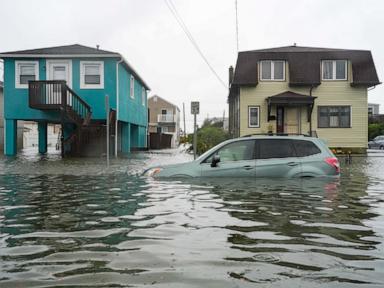
Nor'easter Unleashes 74 MPH Winds, Flooding Across East Coast; States of Emergency Declared
A powerful nor'easter battered the East Coast with high winds and coastal flooding, prompting states of emergency in New York and New Jersey.
An early-season nor'easter slammed the East Coast Saturday, bringing torrential rain, powerful winds, and widespread flood warnings for millions of residents. The storm's impact was immediately felt in New York and New Jersey, both of which declared states of emergency ahead of the severe weather.
Coastal communities braced for dangerous conditions as the storm's intensity combined with high tide to inundate streets and shorelines. Buoys off the Jersey Shore and in southern New England recorded waves reaching 16 feet or more, underscoring the ferocity of the nor'easter.
Wind gusts reached alarming speeds, with a weather station in Surf City, New Jersey, reporting a gust of 74 mph late Friday night. Other locations along the Jersey Shore experienced gusts of 60 mph or higher. In New York City, these strong winds led to fallen trees, some of which landed on parked vehicles.
The implications of the storm were significant, with moderate to major coastal flooding reported from the southern Chesapeake Bay to the Jersey Shore and into Raritan Bay. While tides began to recede, many areas continued to contend with significant inundation.
New York Governor Kathy Hochul, who issued a state of emergency for her state, warned residents of further rainfall and potentially higher tides due to the full moon. She cautioned that wind gusts could exceed 60 mph and that power outages were anticipated. Hochul also stressed the danger of the ocean conditions, advising residents to stay out of the water, stating that anyone entering it was "literally gambling with their life."
In Long Island's Suffolk County, approximately 17,000 residents had lost power by Saturday morning, according to County Executive Ed Romaine. He expressed concern about toppled trees and power lines, particularly in areas like Montauk experiencing 50 mph winds. Romaine anticipates more power outages in the coming 24 hours.
Floodwaters in Freeport, Long Island, reached a high tide of 7.8 feet, marking the highest level in over two years. Ocean County, New Jersey, recorded a high tide of 5.7 feet, its third-highest on record. Despite these high tide events beginning to recede, many areas remained under water.
To mitigate potential service disruptions, New York officials implemented storm door installations at rail yards in Coney Island and Howard Beach, though subways and trains were reportedly operating as expected thus far. The storm served as a stark reminder of coastal vulnerabilities and the preparedness required for severe weather events.
This article was written by AI based on publicly available news reporting. Original reporting by the linked source.