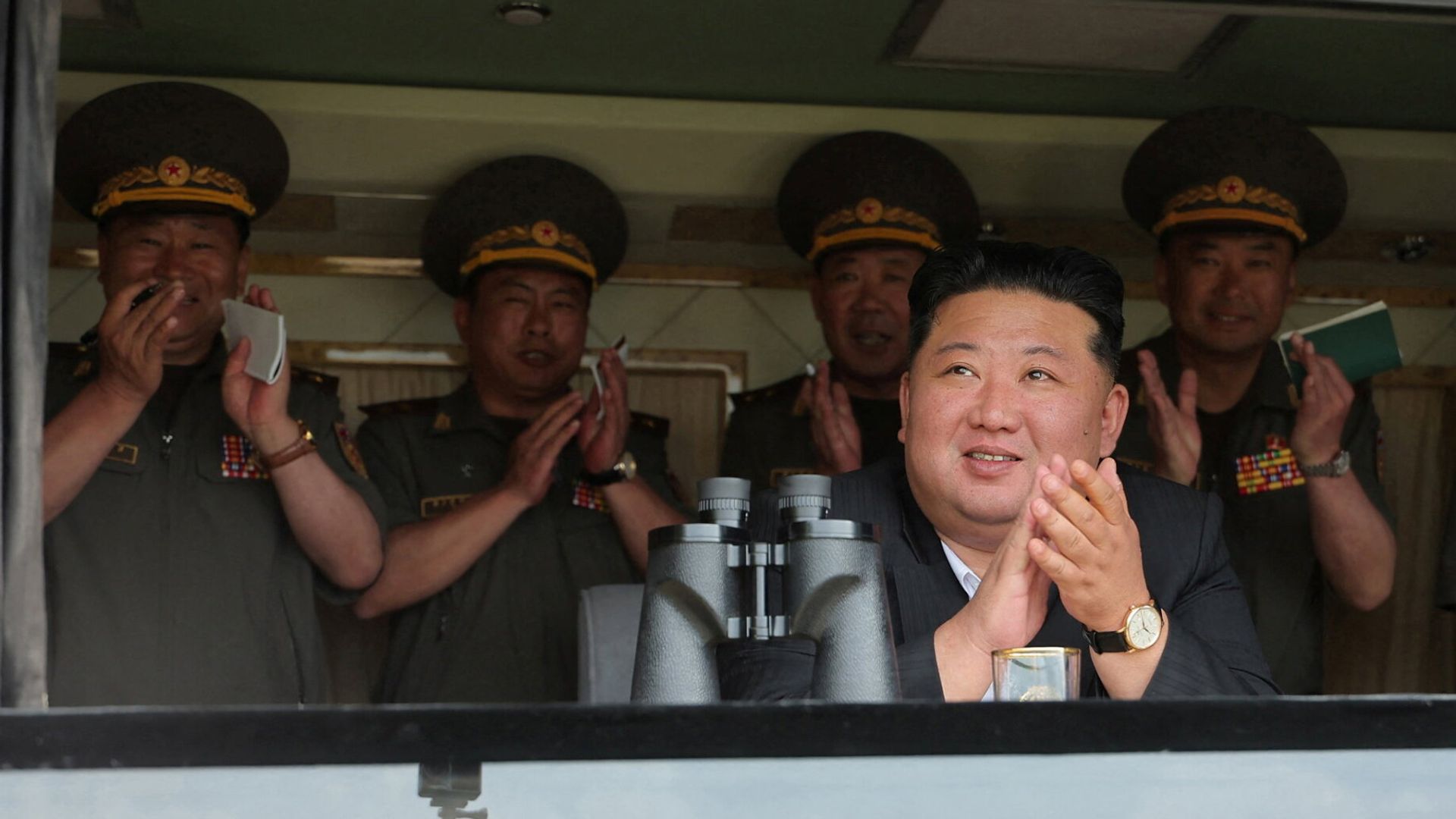
North Korea Declares 'Impossible Survival' Strike Capability Amid Missile Launch
North Korea stated it needs the capability for retaliatory strikes that ensure enemy 'impossible survival,' coinciding with a missile launch.
North Korea has publicly declared its strategic imperative to possess the capability for retaliatory strikes that would render an enemy's "survival and recovery impossible." This assertive statement was reportedly made amidst or around the time of a missile launch, underscoring the nation's ongoing military posturing.
The declaration signals a hardening of Pyongyang's stance on deterrence, emphasizing a readiness to inflict devastating consequences in response to perceived threats. This doctrine appears to prioritize the ability to deliver overwhelming damage, aiming to dissuade any potential aggressor by making the cost of an attack prohibitively high.
While specific details regarding the missile launch, such as its type, trajectory, or landing point, were not provided in the source material, its occurrence alongside the strategic declaration suggests a coordinated message. The statement itself, emphasizing "impossible survival and recovery," highlights a doctrine focused on existential threat to adversaries.
This development is likely to intensify regional tensions and international concerns over North Korea's nuclear and missile programs. It suggests a continued commitment by Pyongyang to enhance its military capabilities and project a readiness to employ them in a highly destructive manner.
Pyongyang's military actions and pronouncements are closely monitored by South Korea, Japan, and the United States, all of whom have expressed concerns about the North's weapons development. The latest declaration could be interpreted as a direct challenge to international calls for denuclearization and a reinforcement of its self-defense narrative.
North Korea has historically used its military demonstrations and strategic messaging to advance its objectives, often seeking to extract concessions or gain leverage in diplomatic or security discussions. The emphasis on making an enemy's survival "impossible" aligns with a long-standing pattern of provocative rhetoric designed to project strength and resolve.
Analysts will be examining the specific capabilities implied by this declaration and assessing whether the recent missile launch indicates any advancements in Pyongyang's delivery systems or destructive potential. The international community faces the ongoing challenge of responding to such assertive declarations while seeking pathways to de-escalate tensions.
Unresolved questions remain regarding the precise triggers for this declaration and the specific nature of the retaliatory capabilities North Korea claims it must possess. The full implications for regional security and future diplomatic engagements will likely unfold in the coming weeks and months.
This article was written by AI based on publicly available news reporting. Original reporting by the linked source.