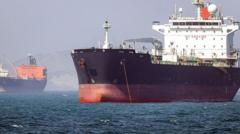
Oil Prices Plummet on Hopes Strait of Hormuz Could Reopen
Oil prices dropped sharply as US officials indicated progress in talks with Iran to reopen the vital Strait of Hormuz shipping lane.
Oil prices experienced a significant decline, reaching a three-week low on Tuesday, following optimistic statements from senior U.S. officials regarding potential progress in negotiations with Iran. The core of these discussions centers on the reopening of the crucial Strait of Hormuz, a vital artery for global energy supplies.
This development is significant because the Strait of Hormuz is a critical chokepoint for international trade, particularly for oil and liquefied natural gas. Before recent disruptions, it handled approximately one-fifth of the world's daily oil and LNG shipments. Any impediment to its operation has historically led to price volatility and concerns about global energy security.
U.S. Secretary of State Marco Rubio and Treasury Secretary Scott Bessent both announced that talks had advanced, suggesting that shipments through the Strait could potentially resume as early as the current week. This news directly impacted the market, with the price of Brent crude, the global benchmark, falling by nearly 5% to below $80 per barrel. West Texas Intermediate prices also saw a drop of over 5%, settling at $76 a barrel, marking their lowest levels since mid-July.
The implications of a reopened Strait of Hormuz are substantial for both energy markets and consumers worldwide. A de-escalation of tensions and a resumption of normal shipping could ease supply concerns and potentially lead to lower fuel prices at the pump. However, the market remains sensitive to the broader geopolitical context.
Previous negotiation attempts in recent months have not always yielded lasting de-escalation between the U.S. and Iran, contributing to a volatile oil market. Drivers have felt the impact of this volatility through higher fuel costs. In the UK, petrol prices have climbed to levels not seen since the conflict began, with an average liter costing £1.60. In the U.S., gasoline prices average over $4 per gallon, and diesel is nearing $5.40 per gallon.
Secretary Rubio indicated that progress has been made in discussions involving Iran and Oman concerning increased ship passage through the Strait, though he cautioned that a final agreement had not yet been reached. "We're hoping that will happen very shortly," he told reporters. Treasury Secretary Bessent expressed a more immediate outlook, suggesting a deal could be finalized on Tuesday or Wednesday, potentially leading to a "more normalized position in this conflict."
Details of any potential agreement remain undisclosed. The Strait of Hormuz has been a focal point in U.S.-Iran relations, and its disruption has had a tangible effect on global fuel prices. Qatar, acting as a mediator, continues its diplomatic efforts, though no direct talks between the U.S. and Iran are currently scheduled.
President Donald Trump had previously issued a warning to Iran, stating it had a "last chance" to agree to a deal for commercial shipping to resume. He also noted that he had called off potential strikes to allow for renewed talks. However, Iran has maintained it is not negotiating directly with the U.S., instead engaging in discussions via Oman.
This article was written by AI based on publicly available news reporting. Original reporting by the linked source.