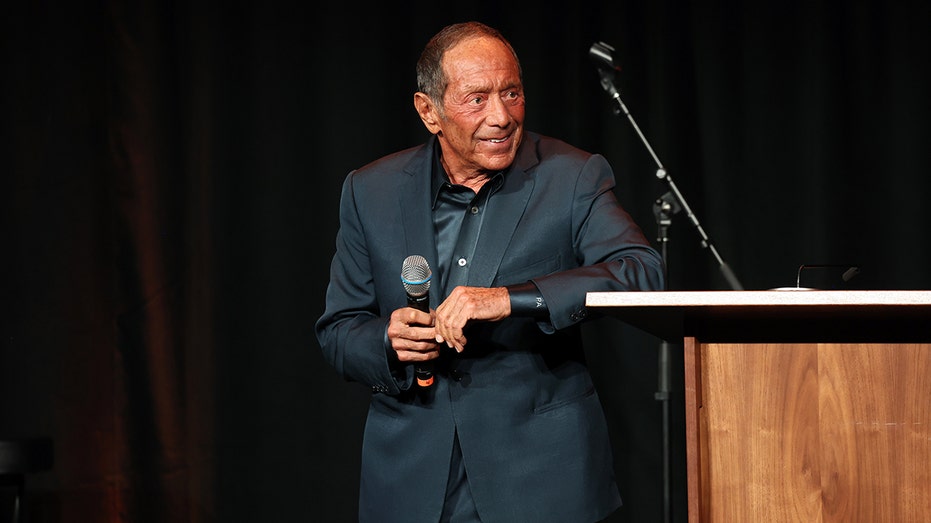
Paul Anka Recounts 'Dark and Bleak' Communist Life, Argues for US Freedom
Singer Paul Anka shared vivid memories of life under communism during a discussion about American freedom, contrasting it with his experiences touring behind the Iron Curtain.
Singer Paul Anka recently offered a stark personal account of life under communist regimes, describing it as "dark and bleak" during a public discussion that contrasted with his advocacy for American freedoms. Anka, a renowned performer with a career spanning decades, drew upon his experiences touring in Eastern Bloc countries during the Cold War to illustrate the stark differences he perceived between communist systems and the principles of liberty in the United States.
Anka's reflections stem from a period when the world was deeply divided by ideological conflict, and travel to and from communist nations was fraught with limitations and political undertones. His tours behind the Iron Curtain provided him with a firsthand perspective on the realities faced by citizens living under such governments, shaping his views on freedom and democracy.
During the discussion, Anka recalled the oppressive atmosphere and lack of freedoms he witnessed. He described the pervasive sense of despair and the absence of the vibrant culture and individual expression that characterized Western societies. These observations fueled his appreciation for the liberties enjoyed in the United States, which he views as a beacon of freedom and opportunity.
His commentary highlights a recurring theme in discussions about political systems: the tangible impact of governance on the daily lives of citizens. Anka's personal anecdotes serve as a reminder of the historical struggles for freedom and the ongoing importance of democratic ideals in shaping societies.
Anka's perspective is not unique among artists and public figures who toured internationally during the Cold War. Many shared similar accounts of the restrictive environments and the psychological toll of living under authoritarian rule. These experiences often informed their artistic expressions and public statements about political systems.
The singer's remarks also come at a time when discussions about political ideologies and national values are prominent globally. His emphasis on American freedom underscores a long-held sentiment among many that the U.S. represents a unique model of liberty, despite ongoing debates about its own societal challenges.
By sharing these recollections, Anka aims to underscore the value of freedoms that many take for granted. His narrative serves as a historical testament to the impact of political systems on individual lives and societal development, reinforcing his long-standing connection to American ideals through his music and public persona.
The contrast between his personal experiences in communist countries and his appreciation for American democracy provides a powerful, albeit subjective, commentary on the merits of different political and economic systems. His willingness to share these deeply personal reflections adds a human dimension to abstract political concepts.
This article was written by AI based on publicly available news reporting. Original reporting by the linked source.