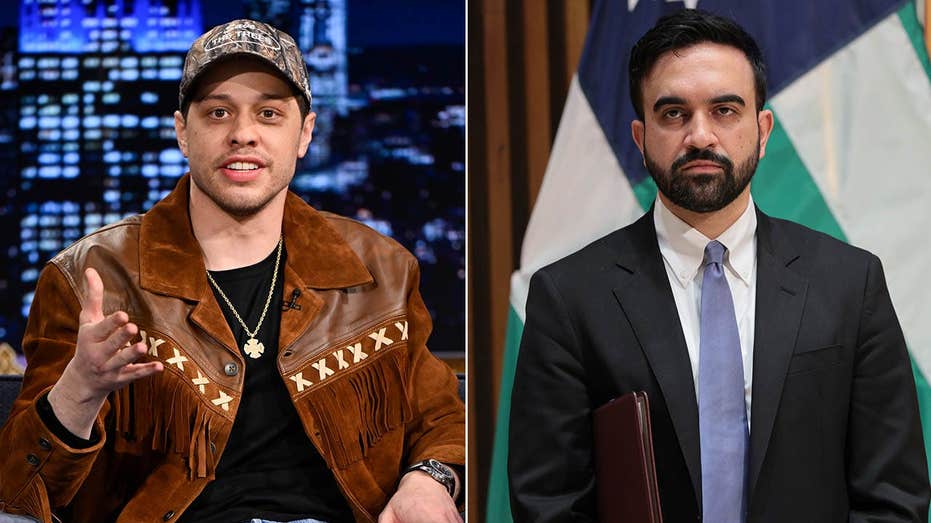
Pete Davidson Mocks NYC Politician Zohran Mamdani
Comedian Pete Davidson targeted New York City politician Zohran Mamdani in a recent critique, questioning his authenticity.
Comedian Pete Davidson has publicly criticized New York City politician Zohran Mamdani, questioning his standing as a representative of Staten Island. Davidson's remarks, shared recently, suggest that Mamdani does not represent the true essence or concerns of the borough's residents.
The comedian's critique centers on Mamdani's political identity and his connection to the community he serves. Davidson's comments imply a disconnect between Mamdani's public persona and the everyday realities of Staten Island.
While specific details of Davidson's remarks were not fully elaborated upon, the core of his critique appears to be an assertion that Mamdani is not a "real" Staten Island politician. This suggests a perceived lack of authenticity or genuine representation from the comedian's perspective.
Davidson's commentary adds another layer to the ongoing public discourse surrounding political representation and authenticity in urban environments. It raises questions about how local politicians are perceived by their constituents and by public figures outside the political arena.
This is not the first time public figures have weighed in on political representatives. Comedians, in particular, often use their platforms to offer satirical or critical commentary on political figures and their actions. Davidson's remarks fall into this tradition, using humor and direct critique to make a point about political representation.
Zohran Mamdani currently serves as a Council Member for the 31st District of the New York City Council, representing parts of Queens. His political career began with a focus on issues pertinent to his district, including housing and labor rights.
Davidson, a native of Staten Island, has often referenced his upbringing in the borough in his comedy. His perspective as a public figure with roots in the area lends a certain weight to his observations about local politics and politicians.
The implications of Davidson's critique are largely within the realm of public opinion and commentary. It serves to highlight differing views on political representation and the criteria by which authenticity is judged in the public sphere.
This article was written by AI based on publicly available news reporting. Original reporting by the linked source.