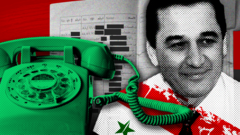
Phone Book Leads to Syrian Spy Chief 'The Spider' in Hiding
A discarded phone book in Hussam Luka's abandoned apartment provided clues to the whereabouts of Bashar al-Assad's feared intelligence chief.
In the Syrian capital Damascus, armed men discovered the abandoned luxury apartment of Hussam Luka, a top intelligence official under the toppled regime of Bashar al-Assad. Luka, known as 'The Spider,' was a feared figure accused of orchestrating atrocities and systematic torture, and had been sanctioned by the UK, US, and European Union.
The discovery was made days after Assad's fall, as rebels searched the apartment for clues about Luka's whereabouts. Scattered among designer clothes and documents were numerous photos of Luka, many alongside the ousted dictator. Gold medals and certificates bore his name, highlighting his significant role.
Among the personal effects was an unremarkable notebook containing dozens of names and contact details, ranging from local shopkeepers and doctors to military officials and individuals with the Luka family name. This notebook, along with Luka's infamous phone number spray-painted on walls in Homs during the civil war, offered potential leads.
Luka, as a local head of the Political Security Directorate, was tasked with suppressing rebel-held areas in Homs. His phone number was known to residents, with some claiming they were promised safe passage out of the besieged city by calling it. However, others who contacted the number were reportedly never seen again.
Residents of Homs referred to Luka as 'The Spider' due to his extensive network of allies and informants, some of whom were allegedly embedded within rebel groups. His influence was described as pervasive, with many recalling his name and number as a symbol of the regime's control and brutality.
Motaz al-Zaydi, a former rebel fighter, recounted the dire conditions in Homs, where residents resorted to extreme measures for survival. He remembered Luka's number being a point of contact for those seeking to escape the conflict, but the outcomes were uncertain and often tragic.
The systematic torture and disappearances attributed to Luka have fueled demands for justice from victims and their families. His role in the intelligence apparatus made him instrumental in the regime's crackdown on dissent, contributing to the widespread human rights abuses documented throughout the Syrian civil war.
The discovery of Luka's personal effects, including the phone book, raises hopes that further information may emerge regarding his alleged crimes and his current location, potentially aiding in accountability efforts for the atrocities committed during the conflict.
This article was written by AI based on publicly available news reporting. Original reporting by the linked source.