Pilot Walks Away Unharmed After F/A-18 Hornet Jet Crashes in Washington
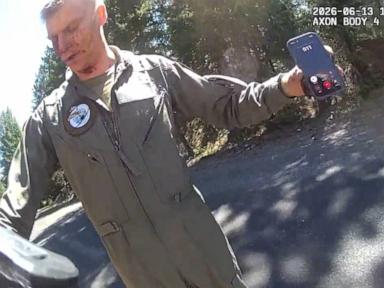
Dramatic footage shows a pilot, who ejected from an F/A-18 Hornet jet, calmly reporting the crash to authorities.
Dramatic new video footage has emerged showing the moment local authorities encountered a pilot who had ejected from a fighter jet just before it crashed into a mountainside in Washington state earlier this summer. The F/A-18 Hornet aircraft impacted a mountainside on June 13 in the area of Rimrock Lake, approximately 55 miles southeast of Seattle, creating a plume of black smoke and igniting a wildfire.
The pilot, assigned to Marine Aircraft Group 11, 3rd Marine Aircraft Wing, based in Miramar, California, appeared shaken and with a bloodied face in the body camera footage. Released Friday by the Yakima County Sheriff's Office, the video captures the pilot approaching deputies with his phone in hand, displaying the 911 application.
Responding officers inquired about the aircraft, with the pilot identifying it as an F-18. He explained they were conducting low-level training and performing circles over the lake. A witness is heard remarking that the pilot "hit the tree bad." Later in the footage, the pilot is seen making a phone call, telling the recipient, "Hey, buddy, I just crashed."
According to the sheriff's department, the pilot sustained only minor facial lacerations. Parachutes were later observed hanging from trees in the vicinity of the crash site. The 3rd Marine Aircraft Wing stated at the time that the pilot was engaged in routine training when the aircraft experienced what they termed a non-fatal aviation mishap.
The cause of the June 13 crash remains under investigation by military authorities. The incident involved an F/A-18 Hornet, a twin-engine, supersonic, all-weather naval fighter jet capable of carrier operations. These aircraft are a staple in naval aviation for both fighter and attack missions.
Such incidents, while rare, highlight the inherent risks associated with high-performance military aviation training. The immediate aftermath captured in the video underscores the critical role of first responders and the pilot's own resilience.
While the F/A-18 Hornet is a robust platform, aviation mishaps can occur due to a multitude of factors, including mechanical failure, environmental conditions, or human error. Investigations into these events are thorough, aiming to prevent future occurrences.
The release of this footage provides a rare, firsthand glimpse into the immediate moments following an ejection and crash, emphasizing the pilot's safe recovery despite the dramatic circumstances.
This article was written by AI based on publicly available news reporting. Original reporting by the linked source.