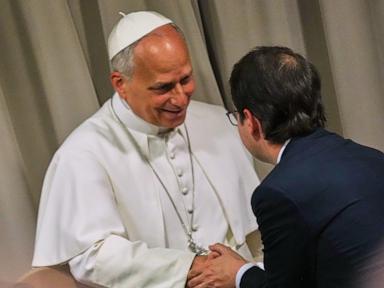
Pope Leo XIV Demands Robust AI Regulation, Prioritizing Common Good Over Profit
Pope Leo XIV issued a manifesto calling for strict AI regulation and ethical development, warning against profit-driven motives and lethal autonomous decisions.
VATICAN CITY (AP) — Pope Leo XIV called Monday for robust regulation of artificial intelligence and for its developers to work for the common good rather than profit, issuing a sweeping manifesto on safeguarding humankind as the technology impacts everything from work to war.
"Magnifica Humanitas" (Magnificent Humanity), Leo’s first encyclical, has been eagerly awaited ever since history’s first U.S.-born pope announced days after his election that he considered AI to be the biggest challenge facing humanity today.
In the text, Leo denounced the "culture of power" driving the AI race, especially in developing ever more sophisticated methods of remote warfare. He declared that it was "not permissible" to entrust irreversible, lethal decisions to AI systems, setting up another potential point of contention with administrations that have worked to deregulate AI development.
Experts in the tech industry, academia, and Catholic morality said the document will likely become a benchmark in the debate over AI, a point of reference for policymakers, researchers, and ordinary citizens alike. It comes as near-daily developments in the technology trigger rising concerns over AI replacing human jobs and even human intelligence.
"It lends itself to people who are at the forefront of these tools and able to see the incredible things that they’re able to do, to have questions about their own ‘What does it mean to be human?’" said Taylor Black, a Microsoft AI executive and director of Catholic University of America’s AI institute.
The pope presented the text at a Vatican launch event that included a co-founder of Anthropic, a company currently engaged in legal disputes over AI technology access. The Vatican's inclusion of Anthropic reflects a decade-long effort to foster dialogue with Silicon Valley regarding the human implications of AI.
Leo repeatedly criticized the concentration of power and data in the hands of a few in the private sector, identifying it as a danger, particularly to children and the vulnerable. He called for external regulation of their activities, stating, "It is not enough to invoke ethics in the abstract; robust legal frameworks, independent oversight, informed users and a political system that does not abdicate its responsibility are required."
He appealed to AI developers and regulators to pause and reflect, urging them to prioritize ethical and spiritual guidelines and to choose to work for the betterment of humanity rather than for personal profit or power. AI competitors OpenAI and Anthropic are among the most valuable U.S. private companies, each valued at hundreds of billions of dollars, surpassing the GDP of many nations. The pope, who has a background in mathematics, traced the history of Catholic social teaching and applied its core concepts—justice, solidarity, the dignity of work, and the universal destination of resources—to the digital revolution.
This article was written by AI based on publicly available news reporting. Original reporting by the linked source.