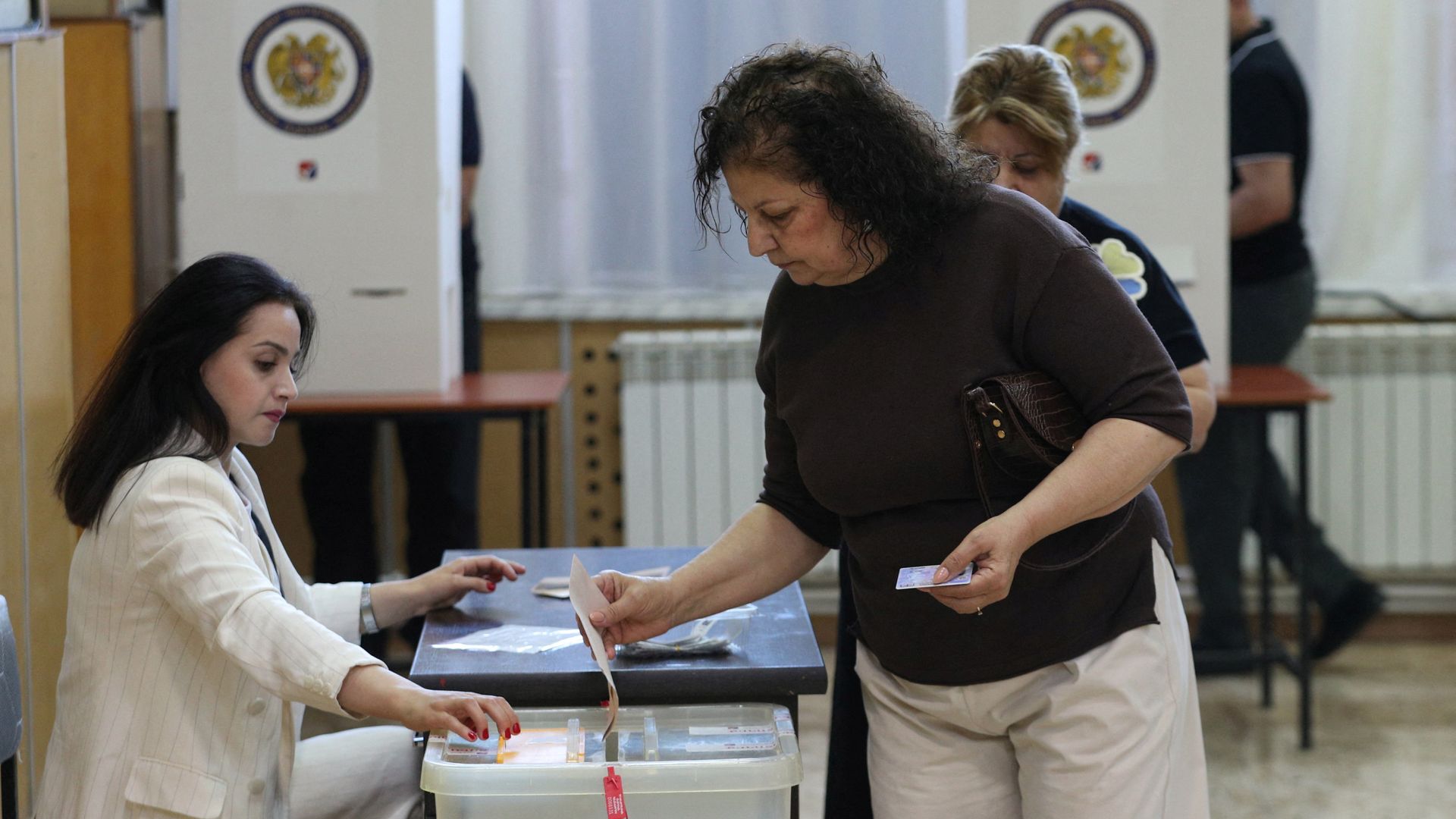
Pro-Europe Party Wins Armenia Election Amidst Russian Interference Claims
A pro-European party secured victory in Armenia's election, overcoming alleged Russian interference and pressure.
A pro-European political party has emerged victorious in Armenia's recent election, a result that observers noted occurred despite significant allegations of interference and pressure from Russia. The outcome signals a potential shift in the nation's geopolitical alignment.
The election took place against a backdrop of heightened regional tensions and Armenia's complex relationship with Russia, its traditional security partner. Watchdog groups monitoring the electoral process raised concerns about external influences attempting to sway the vote.
Reports from election observers highlighted instances of "blatant interference" and "pressure" allegedly exerted by Russia, although specific details of these actions were not elaborated upon in the initial accounts. The pro-European party's success suggests that voters may have favored a closer relationship with Western institutions over continued alignment with Moscow.
This electoral result carries significant implications for Armenia's foreign policy and its security arrangements. A pivot towards Europe could reshape regional dynamics and influence the country's ongoing efforts to navigate its relationships with neighboring states, particularly in the context of its long-standing conflict.
Analysts suggest that the victory for the pro-European bloc could lead to increased cooperation with the European Union and potentially NATO, moving away from the historically strong ties with Russia. Such a shift would represent a considerable change for a nation that has relied on Russian security guarantees for decades.
The alleged Russian interference, as reported by watchdogs, raises questions about the sovereignty of Armenia's democratic processes and the extent to which external powers can influence electoral outcomes in the region. The nature and impact of this alleged interference will likely be a subject of further investigation and international scrutiny.
While the pro-European party has claimed victory, the full extent of their mandate and their ability to implement their agenda will depend on forming a stable governing coalition. The geopolitical ramifications of this election are expected to unfold in the coming months as the new government establishes its policy priorities.
Further details regarding the specific parties involved, the margin of victory, and the concrete evidence supporting the claims of Russian interference are anticipated. The international community will be closely watching Armenia's next steps as it charts its course in a complex geopolitical landscape.
This article was written by AI based on publicly available news reporting. Original reporting by the linked source.