Reform UK Proposes £50 Billion Welfare Cut, Scrapping PIP
Reform UK plans to slash the welfare bill by £50 billion by abolishing the PIP disability payment system, affecting nearly 3 million people.
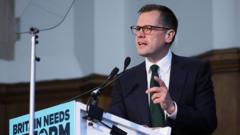
Reform UK has announced plans to cut the national welfare bill by approximately £50 billion and abolish the Personal Independence Payment (PIP) system if elected to government. Robert Jenrick, the party's treasury spokesperson, stated that these proposals represent the most significant overhaul of the welfare system in decades and would impact nearly three million individuals.
These proposals are part of Reform UK's broader economic strategy, aiming to reduce government spending while simultaneously incentivizing employment. The party argues that the current welfare system is unsustainable and advocates for a more targeted approach to support.
The core of the plan involves replacing PIP and the health-related Universal Credit payments with a new 'Health Security Allowance.' Under this new system, only individuals with the most severe, enduring, and high-risk conditions would receive direct cash support. Other claimants would be assisted through council-run programs designed to cover specific, verifiable additional costs associated with their disabilities. Reform estimates that 2.89 million working-age individuals could see their disability payments removed or modified.
Reform UK also intends to introduce a system where companies would be responsible for employees off sick for the first two years of absence, requiring businesses with over five employees to take out insurance for these costs. The party claims this measure, modeled on a Dutch system, would encourage employers to make workplace adaptations and support employees' return to work, thereby reducing insurance premiums. Reform suggests that a cut in employer National Insurance contributions would offset these new costs, making the change neutral for businesses.
In addition to these changes, Reform UK plans to increase spending by £1.85 billion annually on employment support services, including cognitive behavioural therapy and physiotherapy. The party also proposes to reform child benefits, aligning the support system for mental health conditions in young people, such as anxiety, depression, and ADHD, with the proposed changes for adults, though this would only apply to new claimants.
This announcement follows recent government efforts to reform disability assessments. In March 2025, the government attempted to tighten daily living assessments for PIP claimants but faced significant opposition. The current government has also acknowledged issues with the existing system, with Disability Minister Sir Stephen Timms recently stating in an interim report that PIP is 'not fit for purpose' and requires fundamental change.
Reactions to Reform UK's proposals have been swift. The Labour party criticized the plans as 'fantasy economics,' asserting they are built upon reducing support for disabled individuals. The Conservative party dismissed the policy as 'half-baked' and a diversionary tactic.
The proposed reforms raise significant questions about the long-term impact on vulnerable populations and the administrative feasibility of a new allowance system. The specific details of the 'Health Security Allowance' and the council-run support programs, as well as the exact mechanism for offsetting costs for businesses, are expected to be elaborated upon in a policy document to be published.
This article was written by AI based on publicly available news reporting. Original reporting by the linked source.