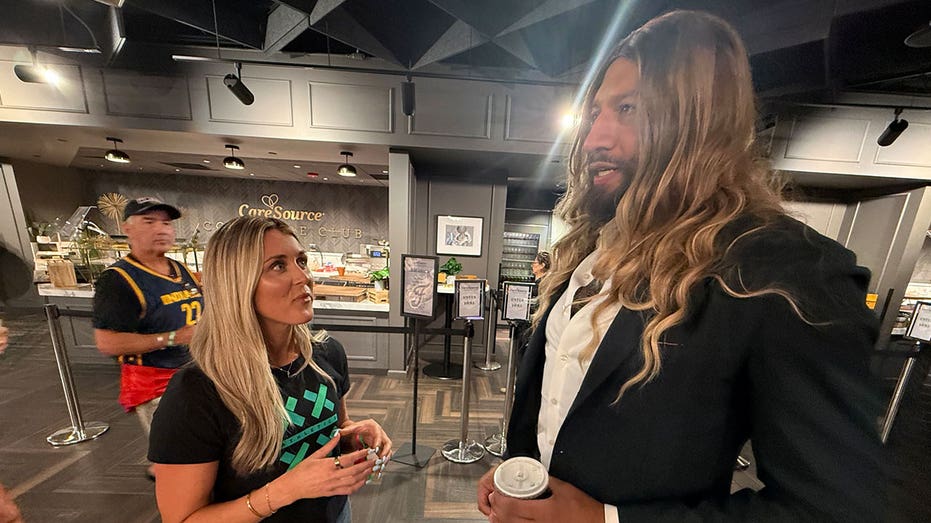
Riley Gaines finds WNBA fan support in Indiana, contrasts with Minneapolis reception.
Riley Gaines experienced a warm reception from Indiana Fever fans, differing from boos in Minneapolis, highlighting a perceived political divide.
Riley Gaines, a prominent advocate for women's sports, recently attended an Indiana Fever game, experiencing a notably different reception from fans compared to a previous event.
Gaines, who has been vocal about her views on transgender athletes participating in women's sports, was present at the game alongside Indiana Attorney General Todd Rokita. This appearance occurred in Indianapolis, a city in a state often characterized as politically conservative.
According to reports, Gaines was met with gratitude and hugs from fans in Indiana, a stark contrast to the boos she reportedly received at a game in Minneapolis. She described the Indiana crowd's reaction as one of appreciation for her stance on women's sports, suggesting a more receptive audience in this location.
The differing receptions in Indianapolis and Minneapolis have been interpreted by some as reflecting a broader political or cultural divide. Gaines herself has often framed discussions around transgender athletes within a political context, frequently referring to "red" and "blue" states.
This event comes amidst ongoing national conversations about the inclusion of transgender athletes in sports categories designated for biological females. Gaines has been a central figure in these debates, advocating for policies she believes protect the integrity of women's sports.
Her presence at the Indiana Fever game, alongside a state's top legal official, underscores the attention her advocacy work has garnered. The contrast in fan reactions suggests that the WNBA, like many other aspects of American culture, may be experiencing varying levels of support based on regional political leanings.
Further analysis of fan demographics and their political affiliations at WNBA games could provide deeper insight into these observed differences. The league itself navigates these complex social and political issues as it seeks to maintain and grow its fanbase.
The contrasting experiences highlight the passionate, and at times polarized, nature of the discourse surrounding gender identity and sports participation in the United States.
This article was written by AI based on publicly available news reporting. Original reporting by the linked source.