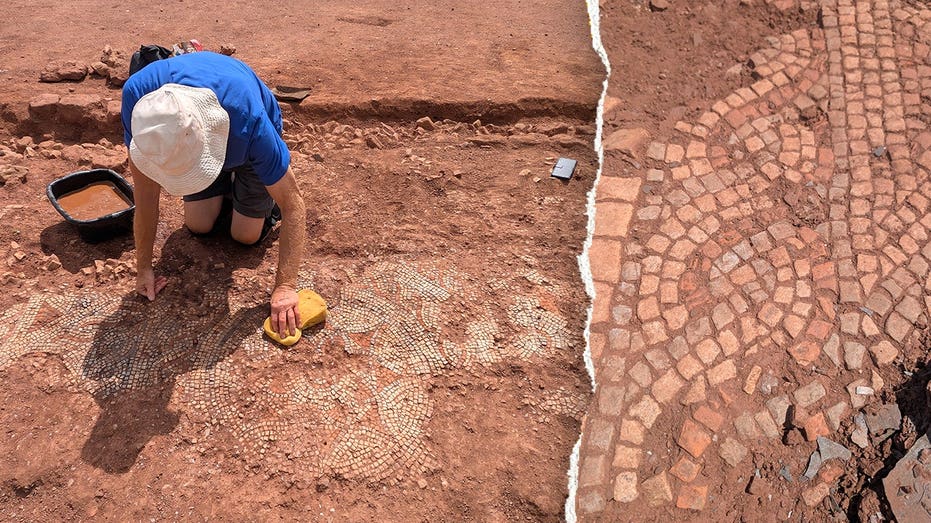
Roman Villa in Devon Reveals Westernmost Mosaic in Britain
Archaeologists discovered a vast Roman estate in Devon, featuring Britain's westernmost known mosaic, offering new insights into Roman Britain.
Archaeologists have unearthed a significant Roman villa estate buried for centuries beneath farmland in Devon, England. The discovery includes what is believed to be the westernmost mosaic ever found in Roman Britain, providing a unique glimpse into the extent of Roman influence in the region.
The sprawling complex, uncovered during routine archaeological surveys ahead of potential construction, suggests a high-status dwelling that existed during the Roman occupation of Britain. The presence of such an elaborate estate this far west challenges previous understandings of the Roman frontier and the lifestyle of wealthy inhabitants in the furthest reaches of the empire.
Excavations have revealed extensive foundations, pottery shards, and the remarkably preserved mosaic floor. Experts note the mosaic's intricate design and its significance as the furthest west example of such Roman artistry found on the island. This find indicates a greater Roman presence and integration in this part of Britain than previously assumed.
The discovery is expected to prompt further research into Roman settlement patterns in the southwest of England. It raises questions about trade routes, cultural assimilation, and the administrative reach of Rome into areas previously thought to be less developed or more peripheral.
Historians have long debated the precise boundaries and influence of Roman civilization in Britain. While major cities like Londinium (London) and Eboracum (York) were clear centers of Roman power, discoveries like this Devon villa highlight the complex and far-reaching nature of Roman occupation. The quality of the mosaic suggests that the owner was a person of considerable wealth and status, capable of commissioning such a decorative and labor-intensive artwork.
Further analysis of artifacts recovered from the site will aim to date the villa's occupation more precisely and understand the daily lives of its inhabitants. The team is also investigating the possibility of other associated structures or settlements that may have supported the main villa estate.
This find adds a crucial piece to the puzzle of Roman Britain, demonstrating that sophisticated Roman life extended to areas beyond the commonly recognized administrative and military strongholds. The mosaic, in particular, serves as a tangible link to the artistic and cultural practices of the Roman elite in the province.
Questions remain about the villa's origins, its duration of occupation, and the reasons for its eventual abandonment. Future archaeological work will focus on these aspects to build a more complete picture of this significant Roman settlement and its place within the broader history of Roman Britain.
This article was written by AI based on publicly available news reporting. Original reporting by the linked source.