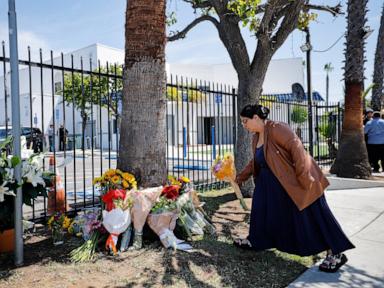
San Diego shooting: Extremist ideology probed after 3 killed
Investigators are examining potential extremism after a shooting at an Islamic center left three dead and two suspects deceased.
San Diego, CA – Investigators are actively probing the potential involvement of nihilistic and accelerationist extremism in Monday's deadly shooting at the Islamic Center of San Diego, which resulted in the deaths of three men. Law enforcement officials are treating the incident as a potential hate crime.
The shooting occurred on Monday, claiming the lives of three individuals, including a security guard. Authorities subsequently discovered two suspects, identified as 17 and 18-year-old Cain Clark and Caleb Vazquez, deceased in a nearby vehicle.
Sources have indicated that investigators are reviewing a video, reportedly posted online by one of the suspects, which appears to capture the attack and its immediate aftermath. This footage, along with items recovered from the suspects' bodies, suggests possible links to extremist ideologies. The video allegedly shows one suspect, believed to be Clark, wearing camouflage and opening fire, before later fatally shooting Vazquez and then himself.
The implications of potential extremist motivations are significant, raising concerns about the broader landscape of hate-motivated violence. The discovery of symbols associated with neo-Nazism and militant accelerationism, including a Sonnenrad patch and SS bolts drawn on a gun, has intensified the investigation into the suspects' ideological affiliations.
Further extremist symbols, such as a flag bearing a Sonnenrad and a gas can with SS bolts, were reportedly found at the scene of the shooting. Investigators are also examining a lengthy 75-page document circulating online, which is understood to contain two essays allegedly written by the suspected shooters. These writings reportedly espouse white nationalism and express animosity towards immigrants, racial minorities, and women.
One of the essays, purportedly written by Vazquez, allegedly details an accelerationist viewpoint and echoes nihilistic rhetoric. The timeline of these writings remains unclear, with a section intended to identify targets left blank. Social media accounts linked to Clark have also reportedly exhibited possible associations with nihilistic violent extremist ideology.
Prior to the incident, Chula Vista police had engaged with Vazquez early last year following concerns raised by an acquaintance about his interest in extremist ideology and mass-casualty attacks. However, these concerns did not meet the threshold for further action at that time.
Authorities are continuing to piece together a comprehensive profile of the suspects and the motivations behind this tragic event, with a focus on understanding the role of extremist ideologies in the violence.
This article was written by AI based on publicly available news reporting. Original reporting by the linked source.