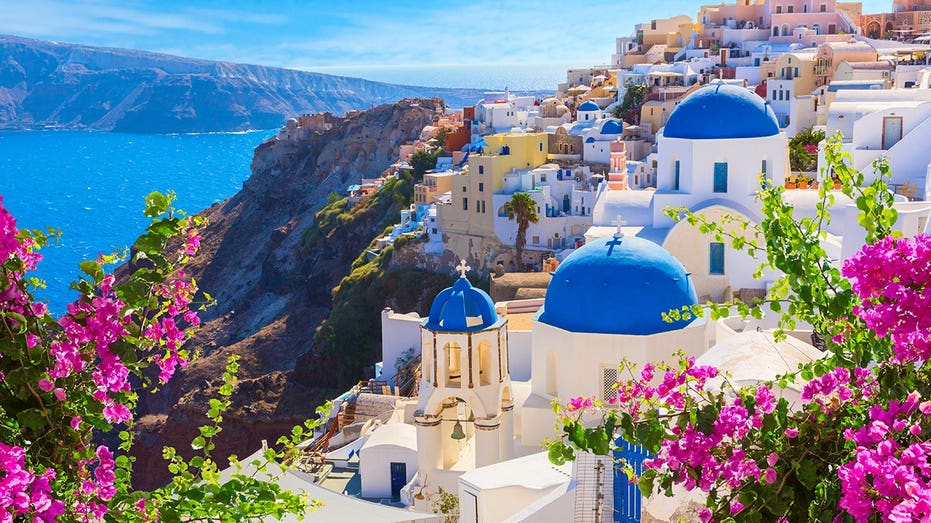
Santorini Crowds Swell as Social Media Fuels Oia's Blue-Domed Church Photo Craze
Tourists are flocking to Santorini's Oia, lining up for photos at iconic blue-domed churches, driven by social media trends.
Santorini's picturesque village of Oia is experiencing a surge in tourist numbers, with visitors now forming lines to capture the perfect photograph at its famed blue-domed churches. This phenomenon, largely attributed to the pervasive influence of social media, has transformed the once-tranquil vacation spot into a bustling hub of photo-seeking travelers.
The iconic white-washed buildings and vibrant blue domes of Oia have long been a draw for tourists, but recent years have seen an exponential increase in visitors specifically targeting these photogenic locations. Platforms like Instagram and TikTok have amplified the visual appeal of Santorini, turning specific spots into must-visit destinations for those seeking to replicate popular online imagery.
Visitors are reportedly waiting for extended periods, sometimes up to an hour, for their turn to pose in front of the churches, particularly the Three Bells of Oia. This intense focus on capturing a single image has led to congestion and altered the visitor experience for many.
The growing popularity of Oia as an 'Instagrammable' destination raises questions about sustainable tourism and the preservation of the island's cultural heritage. Local authorities and residents are grappling with the implications of this trend, balancing economic benefits with the potential strain on infrastructure and the traditional charm of the village.
While the exact origins of the social media-driven surge are difficult to pinpoint, it aligns with a broader trend of 'Instagram tourism,' where travel decisions are heavily influenced by visually striking content shared online. Destinations worldwide are facing similar challenges as unique landscapes and landmarks become viral sensations.
Experts in tourism suggest that while social media can provide invaluable exposure for destinations, it also necessitates careful management to prevent overcrowding and ensure a positive experience for both tourists and locals. Strategies such as crowd management, designated photo areas, and promoting lesser-known attractions are often considered.
The influx of tourists, particularly during peak seasons, places additional pressure on Santorini's resources. Concerns have been raised about the environmental impact, waste management, and the overall quality of life for permanent residents who share their home with an ever-increasing number of visitors.
As the trend continues, the long-term effects on Oia's character and the broader impact on Santorini's tourism industry remain a subject of ongoing discussion and observation, highlighting the complex relationship between digital culture and real-world travel.
This article was written by AI based on publicly available news reporting. Original reporting by the linked source.