Saudi Arabia Joins US in Iraq Strikes Against Iran-Backed Militia
Saudi Arabia and the US conducted joint strikes in Iraq against an Iran-backed militia, escalating regional tensions after recent Iranian attacks.
Saudi Arabia has joined the United States in carrying out strikes against an Iran-backed militia in Iraq, a move that signals a potential escalation of Middle East conflict. The joint operation, announced by US Central Command (Centcom), targeted what they described as Iran-aligned terrorists directed by Iran's Islamic Revolutionary Guard Corps (IRGC) to attack US forces and Saudi energy infrastructure.
This intervention follows a recent series of exchanges between Iran and the US, breaking a brief lull in hostilities. Centcom stated that the strikes were a direct response to over 30 IRGC-directed aerial drone attacks in the preceding 72 hours, which they characterized as unwarranted and unsuccessful.
The Popular Mobilisation Forces (PMF), an umbrella group for several pro-Iranian militias operating in Iraq, reported that at least 10 of its members were killed in the strikes. The PMF condemned the US-Saudi actions as a dangerous escalation and a violation of Iraq's sovereignty.
Experts suggest that the involvement of Saudi Arabia, a key regional player and rival to Iran, signifies a broader alignment against Iranian influence in the Middle East. The strikes aim to deter further aggression from Tehran and its proxies, potentially reshaping the dynamics of regional power.
Centcom's statement emphasized that "The IRGC and its terrorist proxies must cease these attacks to avoid further U.S. military response." The PMF, which has frequently targeted US personnel and interests in Iraq with the aim of expelling American troops, has been a regular target of US retaliatory strikes.
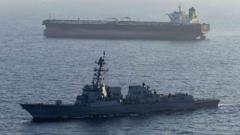
This latest round of hostilities began after Iran launched multiple ballistic missiles in an attempted surprise attack on American forces in the Middle East, according to Centcom. Iran's IRGC claimed responsibility for hitting three oil tankers in the Strait of Hormuz, in addition to targeting a US base in Jordan, though all US missiles were reportedly intercepted.
The renewed conflict comes just days after US President Donald Trump had spoken of "very friendly negotiations" with Iran, following a 13-night bombing campaign by the US that targeted tunnels and bridges in southern Iran, reportedly causing significant casualties.
The ongoing tensions, particularly concerning access and control of the Strait of Hormuz, have had an immediate impact on global energy markets. Oil prices saw an early Wednesday increase, with Brent crude up by 4.3% and US-traded oil up by 4.2%, driven by concerns over potential disruptions to energy shipments.
This article was written by AI based on publicly available news reporting. Original reporting by the linked source.