Senator Warner Won't Confirm Jay Clayton as DNI Over Election Answers
Senator Mark Warner announced he will not vote to confirm Jay Clayton as DNI, citing his performance before the Senate Intelligence Committee.
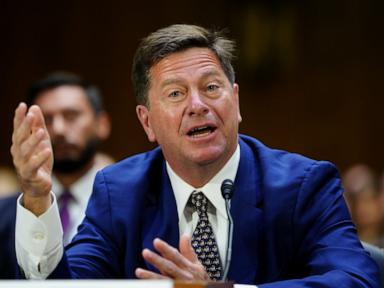
Senator Mark Warner, vice chair of the Senate Intelligence Committee, stated Sunday that he will not vote to confirm Jay Clayton, President Trump's nominee for Director of National Intelligence (DNI). Warner cited Clayton's performance during his confirmation hearing last week as the reason for his decision.
Clayton, currently the U.S. attorney for the Southern District of New York, faced intense questioning from Democrats on the committee, particularly regarding his stance on the 2020 presidential election results. Despite repeated inquiries, Clayton declined to explicitly state that former President Joe Biden won the election, instead stating that Biden was certified as the winner.
"I've known Jay for a long time. I like him, but after his performance before my committee, his inability to answer the question about who won the 2020 election... I am not going to vote for him," Warner told ABC News. He added that while he expects Clayton to be confirmed, he hopes the nominee will be someone he has worked with previously.
Warner's opposition comes as Republicans control the Senate, meaning Clayton can be confirmed without Democratic support. The DNI position is a critical intelligence oversight role within the U.S. government.
The confirmation hearing occurred amidst ongoing discussions about election interference. President Trump recently delivered a national address, alleging foreign interference, particularly from China, in American elections since 2020 and announced the declassification of documents he claimed supported these assertions. China has denied these accusations.
Senators from both parties on the Intelligence Committee, including Warner, have largely stated that the declassified documents contained previously known information and did not prove the 2020 election was stolen, as Trump has claimed. Warner also commented on the landscape of foreign election interference, noting that while China possesses the capability, he views Russia and Iran as more prominent players. He specifically identified Russia as highly effective in influencing U.S. elections, often on behalf of Trump, and Iran as active, typically against Trump.
Despite Warner's decision, the expectation remains that Clayton will secure confirmation. The nominee's reluctance to definitively affirm the 2020 election outcome has become a focal point for Democratic opposition, raising questions about his potential approach to intelligence matters and national security.
This situation highlights the partisan divisions surrounding intelligence appointments and the continued debate over election integrity and foreign influence in U.S. politics.
This article was written by AI based on publicly available news reporting. Original reporting by the linked source.