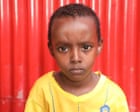
Seven-year-old Abdiqadir faces losing ability to walk after US airstrike
A seven-year-old boy hit by shrapnel in a US airstrike in Somalia may lose the ability to walk without urgent surgery.
A seven-year-old boy in Somalia, Abdiqadir Salah, faces the potential loss of his ability to walk due to shrapnel lodged in his body from a U.S. airstrike. The necessary $750 operation to treat his injuries remains out of reach for his family, as the United States has not acknowledged civilian casualties from the attack six months prior.
The incident occurred on November 15, 2025, in Jamaame, Somalia, when a U.S. airstrike killed at least 12 civilians, including eight children. This event marks one of the deadliest attacks on civilians in Somalia during the Trump administration and is comparable in severity to the 1993 "Black Hawk Down" incident.
Shards of shrapnel remain embedded in Abdiqadir's back and upper thigh. His mother, Marian Haji Abdi Guled, described fleeing with her three injured children, highlighting the devastating impact of the strike on her family and the wider community. The family is struggling to cope with the dual burden of their son's critical injury and the lack of recourse.
The airstrike has raised significant questions regarding U.S. intelligence gathering, target selection, and the potential identification of civilians, including children, by strike teams. The U.S. military has maintained its denial of any civilian harm, leaving victims without a clear path to compensation or aid.
This situation underscores a broader pattern of concern surrounding U.S. military operations in Somalia, where airstrikes have been employed to combat militant groups. Critics have long pointed to the potential for civilian casualties and the difficulties faced by affected families in seeking accountability or assistance.
Abdiqadir's mother expressed her anguish, stating, “What’s worse than being unable to do anything for my wounded children?” Her words reflect the profound helplessness experienced by families caught in the crossfire of such military actions.
Investigations into the specific circumstances of the Jamaame strike are ongoing, with a focus on the accuracy of intelligence and adherence to protocols designed to minimize civilian harm. The lack of transparency and acknowledgment from U.S. authorities complicates efforts to provide justice and aid to those impacted.
As Abdiqadir's condition remains critical, the international community and human rights organizations are watching closely. The case highlights the urgent need for clear accountability mechanisms and humanitarian support for civilians affected by counter-terrorism operations in conflict zones.
This article was written by AI based on publicly available news reporting. Original reporting by the linked source.