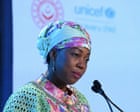
Sierra Leone's First Lady Demands Data Before Condemning FGM
Sierra Leone's First Lady Fatima Maada Bio will not condemn FGM without reliable data, sparking concern among activists and professionals.
Fatima Maada Bio, the first lady of Sierra Leone, has stated she will not publicly condemn female genital mutilation (FGM) unless presented with "reliable data" demonstrating its harmful effects. This stance has drawn criticism from a coalition of health professionals, survivors, human rights activists, and politicians.
Bio, who is also the president of the Organisation of African First Ladies for Development (Oaflad), has faced mounting pressure to clarify her position on FGM. While she denies supporting the practice, her refusal to condemn it outright has raised concerns among those who have dedicated years to advocating against it.
An open letter, sent on June 10 to Oaflad, has called for clarification on Bio's public statements. The letter, signed by over 20 individuals including former minister Amy Smythe and human rights lawyer Isha Dyfan, warns that any perception of support for FGM risks jeopardizing years of advocacy and international commitments.
Bio's comments come at a time when FGM, which involves the partial or total removal of external female genitalia, continues to be practiced in Sierra Leone. Health professionals emphasize that the practice can lead to severe long-term health consequences, including infertility.
Bio, a former film producer and actor, leads a campaign in Sierra Leone called "Hands off our girls," which advocates against child marriage. However, since her husband, President Julius Maada Bio, was elected in 2018, she has consistently avoided condemning FGM.
The controversy surrounding Bio's stance on FGM is distinct from a separate issue concerning her rental of a council flat in Southwark, London, for her British citizen children. Southwark council recently confirmed it had repossessed the property.
Health experts and human rights advocates argue that a clear condemnation from a prominent figure like the First Lady is crucial for advancing efforts to eradicate FGM. They point to extensive research and documented health risks associated with the practice.
While Bio maintains she is against child marriage, her position on FGM leaves unresolved questions about her broader commitment to women's health and rights in Sierra Leone and across the continent.
This article was written by AI based on publicly available news reporting. Original reporting by the linked source.