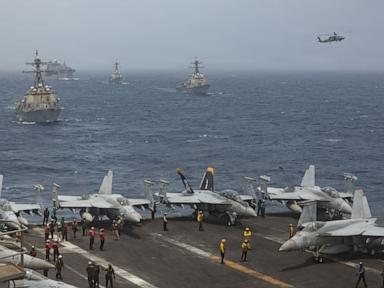
Six Months In: US War with Iran Becomes Quagmire, Disrupts Global Trade
Six months after initial strikes, the US war with Iran has escalated, impacting global trade and drawing the US into a protracted Middle East conflict.
Friday marks six months since the United States and Israel launched significant strikes against Iran, initiating a conflict that has expanded and become increasingly complex. President Donald Trump initially predicted a swift resolution, stating the war would last "four to five weeks." However, the conflict has endured, with Iran retaliating and broadening its actions to several Gulf states.
The war began on February 28, 2026, with coordinated strikes targeting Iran's leadership and military infrastructure. President Trump announced the operations, asserting they were necessary to neutralize imminent threats, including Iran's pursuit of nuclear weapons. This followed earlier U.S. strikes in June 2025, codenamed Operation Midnight Hammer, which aimed to dismantle Iran's underground nuclear facilities. While the administration initially claimed the program was "obliterated," it later conceded that enriched uranium suitable for a bomb remained.
The initial days of the conflict were marked by tragedy when an airstrike hit an all-girls school in southern Iran, resulting in approximately 160 civilian deaths, including 120 schoolchildren. Iran has attributed the attack to the U.S. and Israel, though neither has claimed responsibility. U.S. Central Command stated it is investigating the incident, reaffirming a policy against targeting civilians, and noted that international law prohibits the deliberate targeting of educational institutions.
Iran responded forcefully, launching missile and drone attacks on American bases in Bahrain, Kuwait, Jordan, and Iraq, employing a scale of aggression not seen since the Vietnam War. For months, both sides engaged in retaliatory actions. U.S. Central Command reported striking over 13,000 Iranian targets, including military sites, naval vessels, and air defense systems. The most significant impact on global commerce came when Iran shut down commercial traffic through the Strait of Hormuz, a critical global shipping lane, thereby dictating the war's economic frontline and destabilizing the world economy.
In early March, then-Secretary of War Pete Hegseth downplayed Iran's actions in the Strait of Hormuz, describing them as "sheer desperation." However, six months into the conflict, the strategic goalposts appear to have shifted, with the economic fallout and the reopening of the vital waterway remaining significant challenges. The Pentagon has reportedly faced depletion of resources, highlighting the sustained nature of the conflict.
The prolonged engagement raises questions about the long-term U.S. strategy and its implications for regional stability. The initial objectives of eliminating threats and preventing nuclear proliferation are now weighed against the ongoing economic disruption and the risk of deeper entanglement in the Middle East.
Analysts suggest that the war's continuation could lead to further escalation, potentially involving more regional actors or broader international interventions. The economic consequences, particularly the disruption of oil supplies and shipping, are likely to persist, affecting global markets and potentially leading to increased inflation.
As the conflict enters its seventh month, attention is focused on diplomatic efforts, the potential for a ceasefire, and the eventual rebuilding of Iran's damaged infrastructure. The war's ultimate outcome and its lasting impact on international relations and the global economy remain uncertain.
This article was written by AI based on publicly available news reporting. Original reporting by the linked source.