São Tomé and Príncipe Votes in Tense Election Amidst Political Turmoil
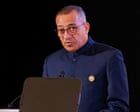
Incumbent President Carlos Vila Nova seeks a second term in São Tomé and Príncipe's presidential election amid a fractured political landscape.
Voters in São Tomé and Príncipe are heading to the polls on Sunday for a presidential election, a process that will test the democratic stability of one of Africa's smallest nations. Approximately 142,000 registered voters, including a significant portion from the diaspora, are eligible to cast their ballots in the island state off the west coast of Africa.
Since achieving independence from Portugal in 1975, São Tomé and Príncipe has cultivated a reputation for holding peaceful and competitive elections. However, this year's vote is overshadowed by a palpable political tension and an ongoing constitutional crisis, adding a layer of uncertainty to the democratic exercise.
The incumbent president, Carlos Vila Nova, who previously represented the ruling Acção Democrática Independente (ADI) party when he was elected in 2021, is now running as an independent candidate. This shift follows a significant rupture between Vila Nova and his former party, which escalated in January of the previous year when he dismissed the prime minister, Patrice Trovoada.
The ensuing political instability saw Trovoada's immediate successor, Ilza Amado Vaz, resign after a mere three days in office, leading to the appointment of the current prime minister, Américo Ramos. This period of flux has contributed to the tense atmosphere surrounding the current presidential race.
Vila Nova faces a field of four other contenders, including Nito D’Abreu, the parliamentary leader of the ADI. Adding to the complexity, former prime minister Jorge Bom Jesus, who had sought to withdraw his independent candidacy, remains on the ballot as he missed the official deadline. The main opposition party, the Movement for the Liberation of São Tomé and Príncipe, has surprisingly aligned with the incumbent president, forming a broad coalition to support Vila Nova, despite their historical opposition to the ADI.
Further complicating the political landscape, a faction of the ADI, reportedly led by Américo Ramos, is endorsing Nito D’Abreu. The election’s outcome could potentially be decided in a second round if no candidate secures more than 50% of the vote, a scenario that could prolong the current political uncertainty.
The fractured alliances and the incumbent president’s independent stance underscore a period of significant political realignment in São Tomé and Príncipe. The election's results will not only determine the country's leadership but also offer insights into the evolving dynamics of its party politics and the resilience of its democratic institutions.
Analysts are watching closely to see how these intricate political maneuvers will translate into voter behavior and whether the nation can navigate this period of tension to maintain its record of peaceful electoral transitions.
This article was written by AI based on publicly available news reporting. Original reporting by the linked source.