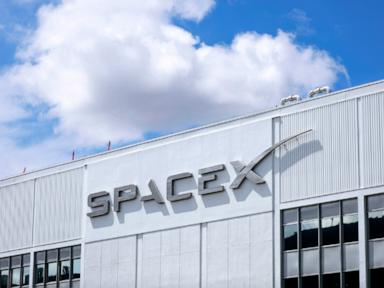
SpaceX Files for IPO, Seeking $1.75 Trillion Valuation Amid AI Push
Elon Musk's SpaceX has publicly filed for an initial public offering, aiming for a $1.75 trillion valuation to fund its AI ambitions.
Elon Musk-led rocket and satellite company SpaceX officially filed for an initial public offering (IPO) on Wednesday, marking a significant step towards becoming a publicly traded entity. This move, anticipated by industry observers, paves the way for one of the year's most closely watched stock market debuts.
The IPO is designed to generate substantial capital for the Texas-based firm, which is increasingly focused on integrating artificial intelligence technologies into its operations. Public trading will expose SpaceX to greater investor and regulatory scrutiny, alongside the mandatory ongoing financial disclosures.
SpaceX is targeting a valuation of $1.75 trillion in its IPO. If achieved, this valuation would position the company as the world's ninth-largest by market capitalization, surpassing Tesla, another company led by Musk, which currently holds the tenth spot with a market cap of approximately $1.4 trillion.
The filing follows SpaceX's strategic merger with xAI, an artificial intelligence venture also spearheaded by Musk. This integration is intended to support SpaceX's ambitious plans to develop orbital data centers, a project aimed at providing computing power through satellite networks. The company states this initiative will help address the significant energy demands of AI infrastructure.
Speculation about SpaceX's IPO plans intensified in December when Musk confirmed reports of the company's intention to pursue a public listing in 2026 with a $1.75 trillion valuation. The potential capital raised could be tens of billions of dollars, crucial for funding its expansive AI initiatives.
This development comes shortly after a San Francisco federal court dismissed Musk's lawsuit against OpenAI and its CEO, Sam Altman. Musk, a co-founder of OpenAI, had accused the company of deviating from its original public-benefit mission. The court found Musk's claims were barred by the statute of limitations, a decision Musk has stated he intends to appeal.
Founded in 2002, SpaceX has established itself as a leader in spacecraft manufacturing and operation, notably with its Starlink satellite internet service, which comprises thousands of deployed satellites. The company's pursuit of orbital data centers highlights its forward-looking strategy, aiming to leverage its space infrastructure for advanced computing services.
The implications of SpaceX's public listing are far-reaching, potentially reshaping the aerospace and AI industries. The substantial capital infusion could accelerate its development of advanced AI technologies and further solidify its presence in the global tech landscape.
This article was written by AI based on publicly available news reporting. Original reporting by the linked source.