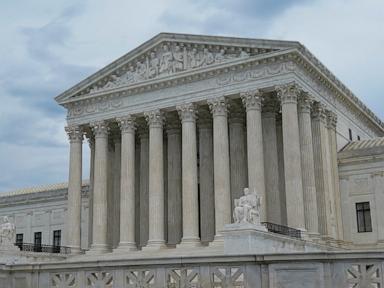
Supreme Court Faces Trump Cases, Climate, Guns, and Election Challenges
The U.S. Supreme Court begins a new term with cases on climate change, gun control, religious schools, and Trump's personal appeals.
The U.S. Supreme Court reconvened Monday to commence a new term marked by a significant number of cases involving President Donald Trump and potential legal battles over election integrity.
The court's docket includes a broad range of contentious issues, from environmental policy and gun rights to religious freedom and immigration, setting the stage for potentially impactful rulings as the nation approaches the midterm elections.
Among the first cases to be heard is a landmark dispute concerning climate change, where local governments are seeking damages from energy companies for alleged harm caused by fossil fuels. Billions of dollars are reportedly at stake. The justices will also consider whether states can ban semi-automatic weapons like the AR-15, implement federal ballot requirements excluding proof of citizenship, and whether religious schools receiving public funds can discriminate against LGBTQ+ families.
This term's decisions could significantly influence public discourse and the legal landscape. Constitutional scholar Genevieve Lakier noted that the court's actions will likely "provide fuel to the fire" of questions about its perceived political motivations.
The court is also set to review the legality of the Trump administration's rapid deportation policies, which sent immigrants to third countries without allowing them to claim fears of persecution, and the indefinite detention of immigrants awaiting deportation without bond.
Beyond policy-related cases, the Supreme Court will address several personal appeals from President Trump. These include efforts to invalidate an $83 million civil judgment against him in a defamation suit, revive a conspiracy claim related to the 2016 campaign, and allow defamation claims against CNN from the 2020 election to proceed.
William Baude, a law professor at the University of Chicago, highlighted the anticipation of "election drama" as the court takes on more litigation connected to the upcoming midterm elections. Recent polling suggests a majority of Americans believe the court's decisions are politically motivated and often favor Trump, though scholars and the justices themselves often dispute this perception.
Last term, the court ruled against the Trump administration on nearly all major policy priorities, a trend that could be tested by the cases on the current docket, which are not expected to be decided until after the November midterms.
This article was written by AI based on publicly available news reporting. Original reporting by the linked source.