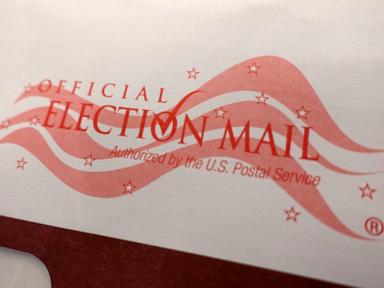
Supreme Court Rejects Trump Bid to Restrict Mail-In Voting Ahead of Midterms
The Supreme Court blocked USPS restrictions on mail-in voting, allowing states to proceed with ballot distribution for the upcoming midterms.
The Supreme Court on Monday rejected the Trump administration's attempt to limit mail-in voting, upholding a lower court decision that blocks the U.S. Postal Service from implementing new restrictions. This ruling allows states to continue sending out mail-in ballots as planned for the upcoming midterms.
The Trump administration had sought to impose new regulations requiring states to report basic voter information, such as name and home address, attached to a unique barcode on every mail-in ballot. Under the proposed rules, postal workers would only deliver ballots to voters appearing on state-provided lists. The administration argued these rules would impose only modest ballot design and review requirements.
However, Democratic-led states and voter advocacy groups contended that the proposed USPS regulations represented an attempt by the Trump administration to federalize elections, which are historically managed by individual states. They argued these measures would make it harder for citizens to vote by mail.
The Supreme Court's majority stated that the government was unlikely to succeed on the merits of its challenge to the lower court's preliminary injunction. The ruling effectively keeps the existing system in place for now, preventing the USPS from enacting the proposed changes.
Justices Samuel Alito and Clarence Thomas dissented, arguing that the new policy fell within the Postal Service's broad authority to regulate mail. They suggested the policy was a "Hail Mary pass" and that the plaintiffs did not meet the high bar for blocking it. Justice Alito wrote that the Postal Service is broadly exempted from administrative law used by states to challenge "arbitrary and capricious" actions.
Justice Brett Kavanaugh agreed with the majority's outcome but based his decision primarily on the timing of the legal challenge, noting it occurred less than two months before the midterms, rather than on the specific arguments about the Postal Service's authority.
The decision comes amid President Donald Trump's repeated, though unfounded, claims of widespread fraud in mail-in voting. The controversy highlights ongoing debates about election security and access to voting methods.
The blocked USPS regulations had been a point of contention, with the Postal Service previously stating it would not deliver ballots if states refused to turn over voter lists under the Trump proposal. This Supreme Court decision averts immediate disruption to mail-in voting processes nationwide.
This article was written by AI based on publicly available news reporting. Original reporting by the linked source.