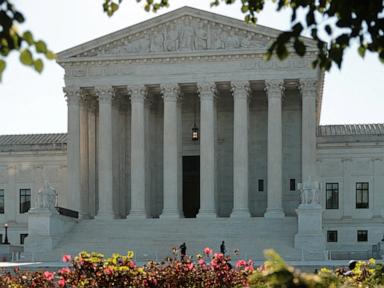
Supreme Court to Rule on Trump's Bid to End Birthright Citizenship
The Supreme Court is expected to decide this week on President Trump's executive order seeking to end birthright citizenship, potentially altering a century-old legal tradition.
The U.S. Supreme Court is poised this week to issue a decision on President Donald Trump's controversial executive order aimed at ending birthright citizenship. The ruling represents a significant test of presidential power and could fundamentally alter the status of millions of children born on American soil, overturning more than a century of established legal precedent and national tradition.
Birthright citizenship, rooted in the principle of *jus soli* (right of the soil), automatically grants citizenship to individuals born within a country's borders, irrespective of their parents' immigration status. This contrasts with *jus sanguinis* (right of blood), where citizenship is determined by parental nationality.
In the United States, the 14th Amendment, ratified in 1868, states that "all persons born or naturalized in the U.S., and subject to the jurisdiction thereof, are citizens of the United States." This provision has been consistently interpreted by courts and the government to include children born to undocumented immigrants, temporary residents, and even tourists. Federal law enacted in 1940 further codified this understanding. For the roughly 3.6 million children born annually in American hospitals, a birth certificate has historically served as definitive proof of citizenship, enabling access to essential services and rights throughout their lives.
President Trump's attempt to end birthright citizenship via executive order has generated significant debate regarding the scope of executive authority and the interpretation of the Constitution. Proponents of the order argue it is necessary to address perceived loopholes in immigration law, while critics contend it directly challenges the 14th Amendment and could lead to a stateless population within the U.S.
Globally, birthright citizenship is practiced in various forms. According to Pew Research Center data, 32 countries have laws closely mirroring the U.S. approach. Many nations in the Western Hemisphere, including Canada, Mexico, and Brazil, also offer broad birthright citizenship. However, European countries tend to have more restrictive policies. For instance, France and Greece grant citizenship at birth only if parents were also born there, while Australia, Germany, and the United Kingdom provide automatic citizenship to children born to legal residents.
The potential implications of a ruling against birthright citizenship are far-reaching. It could affect access to education, healthcare, employment, and civic participation for a substantial portion of the U.S. population. Legal experts anticipate that any ruling will likely face further legal challenges, potentially extending the debate over citizenship for years to come.
The administration's legal justification for the executive order has been met with skepticism by many legal scholars, who point to numerous court decisions and the clear language of the 14th Amendment as barriers to such a change without a constitutional amendment. The Supreme Court's upcoming decision is expected to provide clarity on the boundaries of presidential power in interpreting constitutional rights.
Millions of families, particularly those with mixed immigration statuses, are anxiously awaiting the court's decision, which carries profound consequences for their lives and the future of American citizenship.
This article was written by AI based on publicly available news reporting. Original reporting by the linked source.