Tel Aviv Flight Diverted to Saudi Arabia Amid Potential Terror Incident
A FlyDubai flight to Tel Aviv diverted to Saudi Arabia after a violent cockpit altercation, being investigated as a potential terror incident.
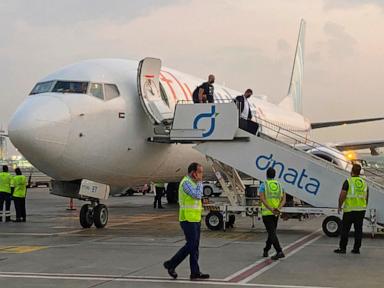
A FlyDubai flight bound for Tel Aviv was diverted to Tabuk, Saudi Arabia, on Wednesday morning following a violent incident within the aircraft's cockpit, according to an Israeli security source.
Israeli authorities are investigating the event as a potential terror incident, signaling the gravity with which the situation is being treated. The flight, originating from Dubai, was carrying primarily Israeli passengers.
An Israeli security source confirmed to ABC News that a "violent altercation" occurred on the plane. The Prime Minister's office stated that Benjamin Netanyahu held consultations on the matter and is actively monitoring developments.
Following the incident, the aircraft experienced a rapid descent, dropping from 34,000 to 16,000 feet in three minutes, according to flight tracking data. Shortly after, the plane's transponder code changed to general emergency, and subsequently to a code indicating hijacking or unlawful interference.
The flight landed in Tabuk, located in northwestern Saudi Arabia, approximately an hour to an hour and a half after the emergency signals were activated. FlyDubai confirmed the diversion and landing in Tabuk due to an in-flight incident.
Netanyahu's office issued a statement assuring that the situation is under control and measures are being implemented to ensure the safe return of Israeli passengers. The Israeli Defense Forces have recommended that a military aircraft be dispatched to repatriate the passengers from Saudi Arabia.
This incident raises significant security concerns, particularly given the nature of the alleged cockpit altercation and the subsequent emergency signals. The involvement of Israeli security forces and the potential for a terror-related motive underscore the complex geopolitical context surrounding the flight.
Further details regarding the individuals involved in the altercation and the specific nature of the threat are expected to emerge as the investigation progresses. The diversion to Saudi Arabia, a country with which Israel does not have full diplomatic relations, also highlights the ad-hoc cooperation that can occur in emergency situations.
This article was written by AI based on publicly available news reporting. Original reporting by the linked source.