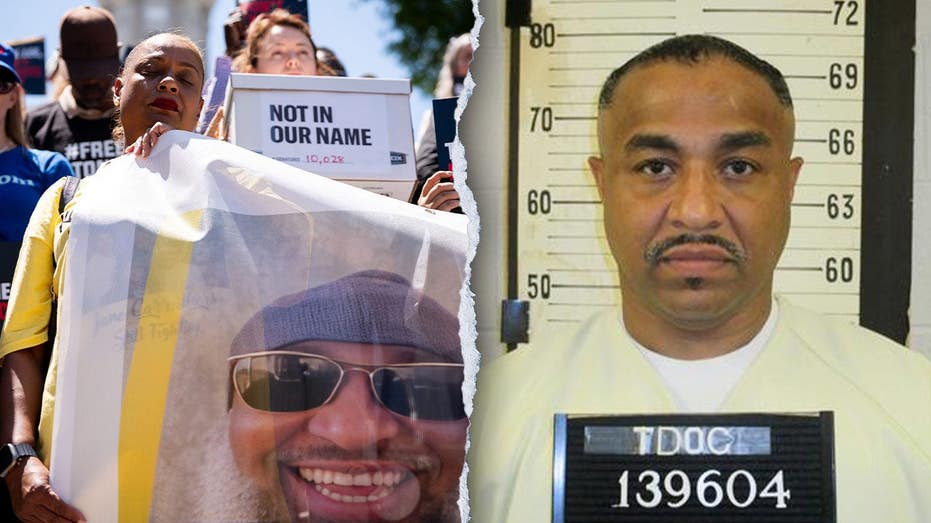
Tennessee execution halted for death row inmate Tony Carruthers due to IV line failure
Death row inmate Tony Carruthers' execution was stopped due to issues with an IV line, granting him a reprieve.
The scheduled execution of death row inmate Tony Carruthers in Tennessee was halted late Monday after officials encountered problems with the intravenous (IV) line intended for the lethal injection.
Carruthers, convicted of the 1997 murder of a Nashville convenience store clerk, was set to be executed at 7 p.m. local time. However, the Tennessee Department of Correction confirmed that the process was stopped due to "unforeseen issues" with the IV line, preventing the execution from proceeding as planned.
Officials stated that the issues arose during the attempt to establish the IV line, a critical component of the lethal injection protocol. The exact nature of the problem was not immediately disclosed, but it was sufficient to halt the proceedings. This marks the second time in less than a year that a Tennessee execution has been stopped due to issues with the IV insertion process, following the case of David Miller in November.
With the execution halted, Carruthers will remain on death row. The reprieve means his case will likely enter further legal review, potentially delaying any future execution attempts for at least a year, as is customary in such circumstances. This development raises further questions about the state's ability to carry out executions smoothly and efficiently.
The incident has reignited debate surrounding the death penalty and the methods used in lethal injections. Critics of capital punishment often point to such procedural failures as evidence of the system's inherent flaws and the potential for cruel and unusual punishment.
Tennessee has faced numerous legal challenges and delays in its execution schedule. The state has been among those that have struggled to obtain lethal injection drugs, leading to the adoption of alternative protocols and, in some instances, the use of midazolam, a sedative that has been a subject of controversy in other states.
Legal advocates for inmates on death row have consistently argued that the complexities and failures associated with lethal injection protocols constitute a violation of constitutional rights. These recurring issues provide ammunition for arguments that the process is unreliable and inhumane.
As of Tuesday morning, no further details regarding the specific IV line malfunction or the state's next steps in Carruthers' case have been released. The reprieve, however, offers a temporary but significant delay for the inmate and continues to highlight the ongoing challenges within Tennessee's capital punishment system.
This article was written by AI based on publicly available news reporting. Original reporting by the linked source.