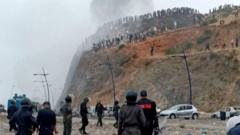
Tens of Thousands Flood Ceuta; Spain Calls It 'Attack'
Thousands of migrants reached Spain's Ceuta enclave from Morocco by swimming and over the border fence. Spain's PM decried the event.
Tens of thousands of migrants have entered Spain's North African enclave of Ceuta from Morocco, overwhelming resources and prompting a strong reaction from the Spanish government. Migrants arrived by swimming across the Mediterranean Sea and using inflatable rafts, while others breached the border fence.
Ceuta, one of two Spanish territories located on Morocco's northern coast, has long been a significant point of transit for migrants attempting to reach Europe. The sudden surge in arrivals has placed immense strain on the enclave's capacity to manage the influx.
Juan Jesús Vivas, the leader of Ceuta, stated that the number of arrivals has overwhelmed local resources. He has urged the Spanish national government to intervene and provide assistance. Prime Minister Pedro Sánchez of Spain characterized the situation as an "attack" on Spanish sovereignty.
Sánchez also announced that all migrants who entered illegally would be returned to Morocco as soon as possible. The Spanish government is reportedly working on measures to manage the situation and reinforce border control.
Officials reported that over 25,000 migrants have voluntarily returned to Morocco so far, indicating ongoing efforts to manage the flow. However, the scale of the recent arrivals suggests a significant escalation in migration attempts towards Ceuta.
The enclave's geographical location makes it a common, albeit dangerous, route for those seeking to enter the European Union. The latest events highlight the persistent challenges faced by both Spain and Morocco in managing migration flows across the Strait of Gibraltar.
This incident is expected to intensify discussions about border security, migration policies, and the broader issue of irregular migration from North Africa to Europe. International organizations are likely to monitor the situation closely, focusing on the humanitarian aspects and the rights of the migrants involved.
Further details regarding the specific triggers for this mass crossing and the long-term strategies to address such events remain a subject of ongoing assessment by Spanish and Moroccan authorities.
This article was written by AI based on publicly available news reporting. Original reporting by the linked source.