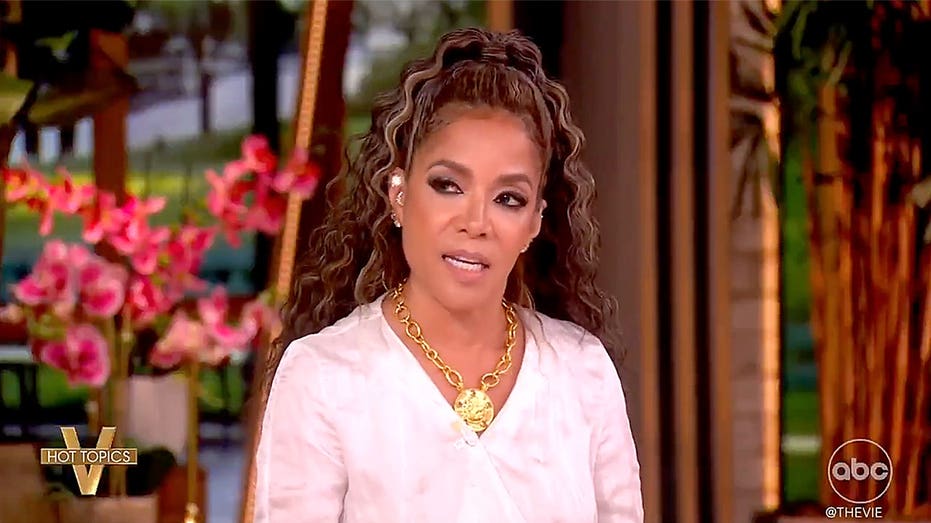
'The View' Host Sunny Hostin: Smithsonian Hearings Avoid Reparations
'The View' co-host Sunny Hostin suggested Smithsonian hearings are a tactic to avoid paying reparations for slavery.
Sunny Hostin, a co-host on the ABC daytime talk show 'The View,' has voiced her belief that recent Smithsonian hearings are a strategic maneuver to sidestep the issue of reparations for slavery.
Hostin's remarks suggest a skepticism towards the stated aims of the hearings, implying that they serve as a political diversion rather than a genuine effort to address historical injustices and their ongoing consequences.
During a discussion on 'The View,' Hostin reportedly stated that the hearings are not about the Smithsonian's operations but rather about the Trump administration's desire to avoid making reparations. This perspective frames the congressional engagement with the institution as a means to prevent financial compensation for descendants of enslaved people.
The broader conversation around reparations for slavery has been a significant topic of debate in the United States, with varying viewpoints on its feasibility, implementation, and historical necessity. Hostin's comments inject a specific interpretation into the ongoing discourse, linking institutional scrutiny to the political will to address this complex issue.
Proponents of reparations argue that they are a necessary step to acknowledge and rectify the lasting economic and social disparities caused by centuries of slavery and subsequent discriminatory practices. They often point to the wealth gap and systemic inequalities as evidence of this ongoing impact.
Conversely, opponents raise concerns about the practicalities of implementing such a program, including who would be eligible to receive reparations and how they would be funded. Some also argue that current generations should not be held responsible for the actions of past ones.
The Smithsonian Institution, a complex of museums and research centers administered by the United States government, has been a focal point in discussions about American history and culture. Its engagement with congressional committees often relates to its funding, operations, and its role in interpreting national narratives.
Hostin's assertion, while representing a specific viewpoint, highlights the deeply entrenched divisions and the high stakes involved in discussions about historical accountability and potential reparations in the United States.
This article was written by AI based on publicly available news reporting. Original reporting by the linked source.