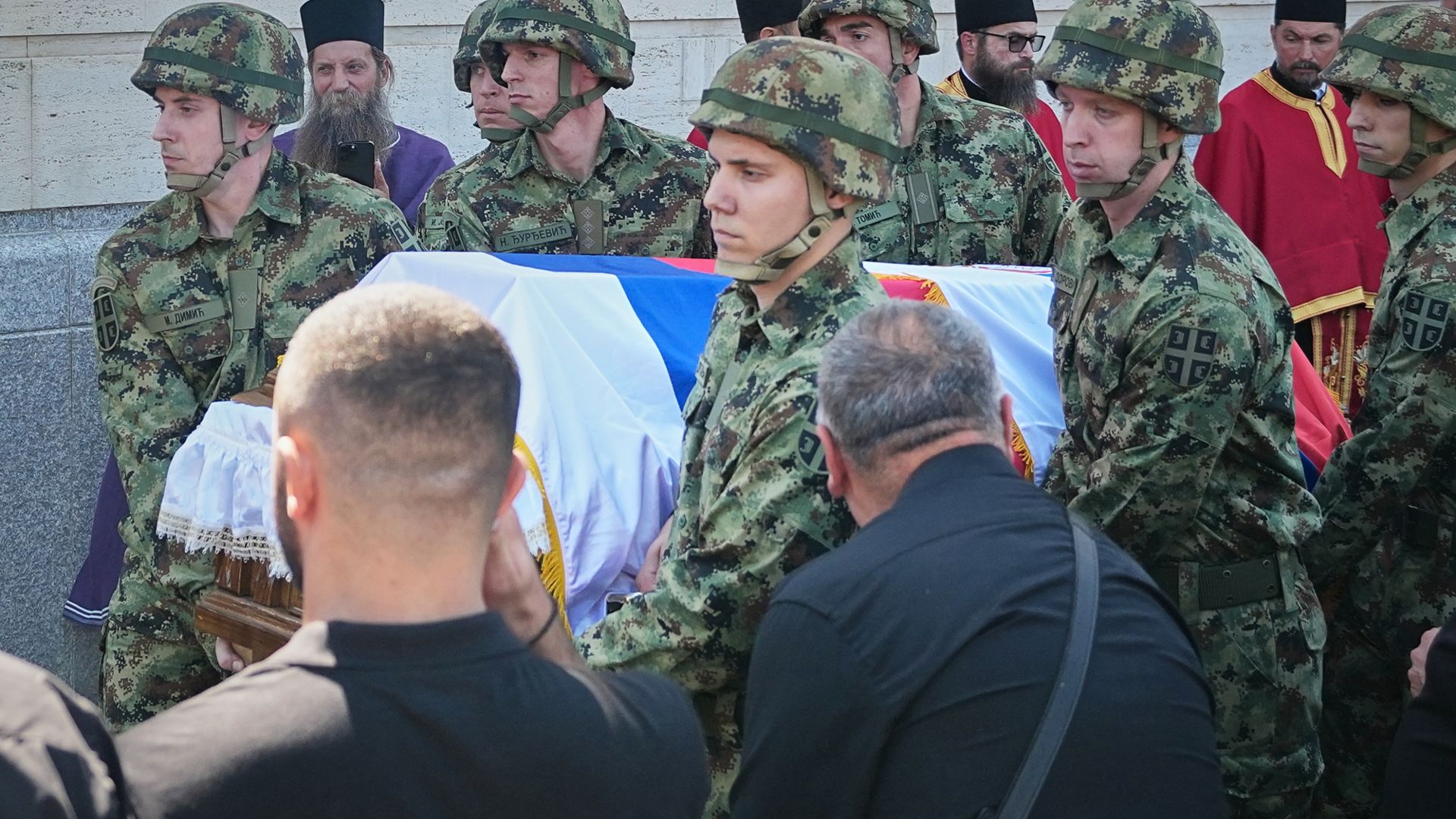
Thousands Honor Ratko Mladic at Belgrade Funeral Amid Controversy
Former Bosnian Serb General Ratko Mladic was laid to rest in Belgrade, with thousands attending his funeral service.
Thousands of mourners gathered in Belgrade, Serbia, on Friday for the funeral of former Bosnian Serb General Ratko Mladic, who was widely known as the "Butcher of Bosnia." The service took place in front of the Church of St. Sava, a prominent landmark in the Serbian capital.
Mladic, convicted of genocide and war crimes by a UN tribunal, died earlier this month at the age of 80. His funeral has drawn significant attention, given his controversial legacy as a military commander during the Bosnian War in the 1990s.
Reports indicated that a large crowd assembled to pay their respects, with many carrying flags and portraits of the former general. The event highlighted the deeply divided sentiments surrounding Mladic's role in the conflict, with some viewing him as a national hero and others as a perpetrator of immense suffering.
The funeral proceedings and the public's response are expected to reignite discussions about accountability for wartime actions and the ongoing process of reconciliation in the Balkan region. The presence of thousands at his funeral underscores the complex historical narratives that continue to shape national identities and political discourse.
Mladic was convicted in 2017 by the International Criminal Tribunal for the former Yugoslavia (ICTY) for his role in orchestrating campaigns of ethnic cleansing and atrocities, including the Srebrenica massacre, where over 8,000 Bosniak men and boys were systematically killed. His conviction was upheld on appeal.
The court found Mladic responsible for crimes against humanity and violations of the laws or customs of war. The scale of the atrocities committed under his command led to his notoriety and condemnation internationally, while also fostering a cult-like following among some nationalist groups.
Reactions to the funeral have been varied. While supporters see him as a defender of Serbian interests, victims' groups and international observers have expressed dismay at the public display of support for a convicted war criminal. The event serves as a stark reminder of the unresolved traumas and differing perspectives that persist years after the conflict.
Questions remain about the full extent of support networks for individuals convicted of such severe crimes and the broader implications for justice and memory in post-conflict societies. The funeral's attendance suggests that Mladic's legacy continues to be a contentious and influential factor in Serbian public life.
This article was written by AI based on publicly available news reporting. Original reporting by the linked source.