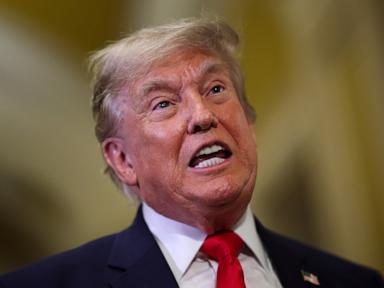
Trump and Cassidy clash aggressively over war powers vote
President Trump and Senator Cassidy engaged in a heated exchange during a Republican senators' meeting regarding a war powers resolution.
President Donald Trump and Senator Bill Cassidy engaged in a heated confrontation during a meeting with Republican senators on Wednesday, sources told ABC News. The clash centered on the war powers resolution that passed the Senate on Tuesday, a rare legislative rebuke of the president.
The resolution, which aims to limit President Trump's authority to engage in military action in Iran, passed by a narrow 50-48 vote. This outcome was made possible by the support of four Republican senators, including Cassidy, who voted with the Democratic majority. The House of Representatives had previously passed the measure earlier in the month.
Sources described the exchange between Trump and Cassidy as a shouting match, with Senate Majority Leader John Thune and other senators attempting to de-escalate the situation. At one point, President Trump reportedly called Senator Cassidy a "lunatic." Cassidy did not deny this characterization when questioned by ABC News.
The implications of this internal party discord are significant, highlighting a division within the Republican ranks regarding the president's foreign policy decisions and the use of military force. The resolution itself, while not having the force of law, serves as a symbolic check on presidential power.
President Trump, speaking briefly to reporters after the meeting, described it as "really great" and stated that the party was "very proud" and "well unified," though he acknowledged not liking "a few people." Cassidy later admitted he lost his temper during the discussion, acknowledging that his reaction was inappropriate. He explained his frustration stemmed from a lack of clear information from the administration regarding the objectives and duration of military engagement.
Cassidy stated that he voted for the war powers resolution because he wanted to understand the situation better, saying, "You have not told the American people what's going on. It was supposed to last four weeks. It's lasted four months. Our original objectives have not been achieved, and I want to know what's going on." He further elaborated that he matched the president's tone and volume before being urged to sit down by another senator.
This incident underscores a broader tension between Congress and the executive branch over war-making authority, a recurring theme throughout U.S. history. While this particular resolution does not carry legal weight, it represents a significant bipartisan expression of concern regarding the president's unilateral decision-making in matters of war.
Unresolved questions remain about the long-term impact of this clash on party unity and President Trump's relationship with members of his own party who have shown an inclination to diverge from his policy positions. The president's remarks about "a few people" he does not like suggest potential future friction with other senators who may have similar concerns.
This article was written by AI based on publicly available news reporting. Original reporting by the linked source.