Trump Announces New Iran Talks Monday After Cancelling Strikes
US President Donald Trump stated new negotiations with Iran will commence Monday, following his decision to halt planned military action.
U.S. President Donald Trump announced on Sunday that new talks with Iran are scheduled to begin on Monday, a day after he called off what he described as massive strikes against the country.
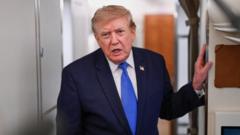
Trump told reporters on board Air Force One that Iran and U.S. allies in the Middle East had requested he hold off on any military action, as the parameters of a deal had reportedly been agreed upon. This development shifts the focus from potential military confrontation to diplomatic engagement.
"We're talking to them in the form of a negotiation. It begins tomorrow afternoon," Trump stated. He indicated that Saudi Arabia's Crown Prince Mohammed Bin Salman, along with U.S. partners like the United Arab Emirates and Qatar, had urged him to reconsider the strikes over the weekend. These allies, he suggested, believed a deal was within reach.
The announcement led to a drop in global oil prices on Monday morning. Brent Crude fell by 4.5% to $83.98 per barrel, and U.S.-traded oil decreased by 4.6% to $80.74 per barrel. The Strait of Hormuz, through which approximately 20% of the world's crude oil and liquefied natural gas typically flows, has been a focal point of market fluctuations since the conflict began.
However, Iran's semi-official Mehr news agency refuted Trump's claims, calling them "nothing but a new lie" and denying that Tehran had requested a pause in military action. Earlier on Sunday, Iranian Foreign Minister Abbas Araghchi had indicated that negotiations with Oman regarding a deal on the Strait of Hormuz were nearing finalization, according to Iranian media.
Trump declined to specify the location or participants for Monday's talks, nor did he provide a deadline for reaching an agreement. "We'll just see how it is. We're ready to go anytime we want... I'm not looking to kill people," he remarked. He also did not confirm whether the planned strikes would have targeted Iranian energy infrastructure, an act that international law experts suggest could be considered a war crime.
Iran's acting Defence Minister Majid Ibn al-Reza previously stated that Tehran views all threats from adversaries as credible, even if perceived as psychological warfare. He assured that the nation would not be caught off guard or remain passive.
This instance follows a pattern where Trump has issued strong warnings to Tehran, only to later emphasize that diplomacy is being pursued. His earlier statements on Saturday had described the U.S. as "locked and loaded" for strikes of unprecedented scale, but he ultimately decided against the attack, stating it would have been the largest since World War II and could have jeopardized prospects for a negotiated settlement to the ongoing conflict.
This article was written by AI based on publicly available news reporting. Original reporting by the linked source.