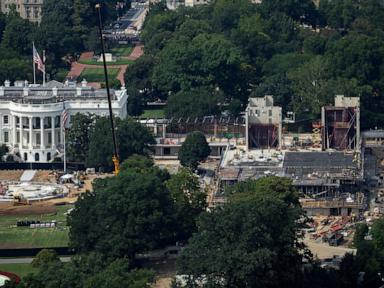
Trump Appeals to Supreme Court to Continue White House Ballroom Construction
The Trump administration asked the Supreme Court to allow controversial White House ballroom construction to proceed, citing national security concerns.
The Trump administration has appealed to the Supreme Court to allow construction of a helipad and ballroom at the White House to continue, seeking an emergency stay of a lower court's injunction. The administration argues that the project, which it claims is 65% complete, is vital for the security of President Donald Trump and his family.
The injunction, set to take effect on August 21, would pause substantial above-ground construction while legal challenges to its legality are resolved. A district court had previously ruled that President Trump lacks the authority to undertake such extensive renovations without congressional approval, a decision that was upheld by a divided federal appeals court.
Solicitor General John Sauer, representing the administration, described the injunction as "extraordinary and unlawful." He contended that halting construction would undermine the advice of top military, intelligence, and law enforcement officials and would wrongly grant a single judge the authority to determine necessary security measures for the White House.
The administration's appeal to the Supreme Court highlights concerns that pausing construction could directly endanger the president's life, referencing recent assassination attempts and threats. Sauer asserted that presidents have historically been granted broad authority to renovate and secure the White House, emphasizing that the president is the "sole, elected head of the Executive Branch."
In its filing, the government argued it is likely to prevail on appeal. They maintain that the National Trust for Historic Preservation, the group that brought the lawsuit, lacks legal standing. Furthermore, they cited federal law that permits presidents to oversee the "care, maintenance, repair, alteration, refurbishment, and improvement" of the White House.
Legal experts note that the Supreme Court's decision on whether to grant the emergency stay will be critical. If the stay is denied, construction could be significantly delayed or halted, potentially impacting national security perceptions and presidential operations.
The Supreme Court is expected to request a response from the National Trust for Historic Preservation within the next week before making a decision on the emergency stay. The administration also intends to ask the court to expedite oral arguments and a final decision on the case's merits.
This legal battle underscores the ongoing tension between presidential authority over the White House and the need for congressional oversight and preservation of historic landmarks. The outcome could set a precedent for future executive actions regarding renovations of the presidential residence.
This article was written by AI based on publicly available news reporting. Original reporting by the linked source.