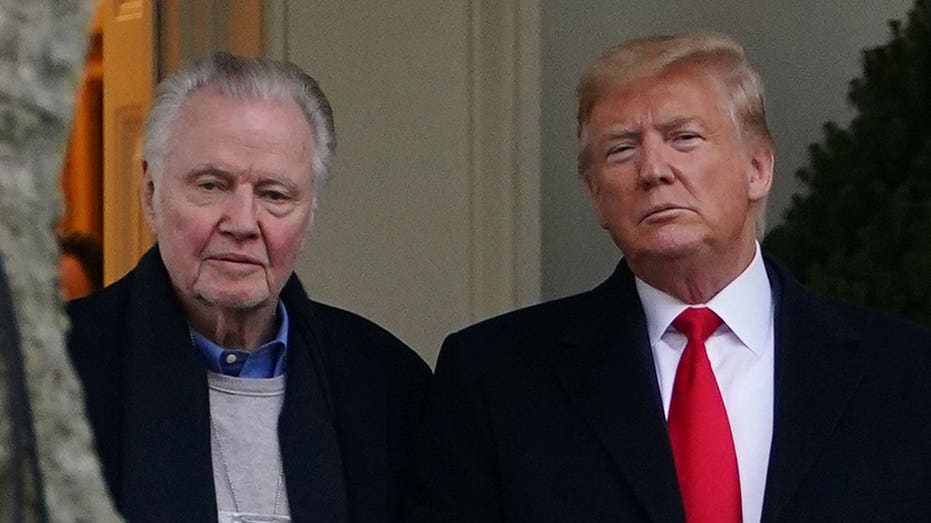
Trump blasts Hollywood, seeks federal tax incentive after meeting
President Trump met with actor Jon Voight, criticizing Hollywood and advocating for federal tax incentives for film production.
President Donald Trump has sharply criticized Hollywood, describing the industry as a "total disaster," and is now pushing for the implementation of federal tax incentives to encourage film production within the United States. The President's remarks and renewed focus on the issue followed a meeting with veteran actor Jon Voight at the White House.
Trump has previously voiced concerns about Hollywood's perceived liberal leanings and its impact on American culture. This latest engagement with Voight, a vocal supporter, appears to have galvanized his administration's interest in exploring ways to support the domestic film industry, potentially through financial incentives that could rival those offered by other countries.
During the meeting, the President and Voight reportedly discussed the challenges facing American filmmakers and the potential benefits of a federal tax credit. The aim would be to make it more economically attractive for studios to shoot movies and television shows domestically, rather than seeking more favorable tax climates abroad. Details on the specific nature or potential scale of these tax incentives were not immediately disclosed.
The push for federal tax incentives comes at a time when the film and television industry is highly mobile, with numerous countries actively competing to attract production through various tax rebates and subsidies. Supporters argue that such measures can stimulate local economies, create jobs, and bolster the national creative sector.
Voight, known for his conservative political views, has been a public supporter of President Trump. His participation in the meeting underscores the administration's effort to engage with figures across various sectors to gauge public and industry sentiment. This initiative also aligns with a broader, though often debated, strategy of promoting American industries and jobs.
The potential economic impact of such incentives is a key consideration. Proponents suggest that attracting more productions to the U.S. could lead to significant job creation for actors, crew members, and support staff, as well as generate revenue for local businesses in filming locations. However, the effectiveness and cost of such programs are often subjects of debate among policymakers and economists.
Critics, however, might question the role of federal government intervention in a private industry and the potential for such incentives to disproportionately benefit large studios. The feasibility of implementing these tax breaks within the current legislative landscape and the broader economic implications will likely be subjects of further discussion and scrutiny.
As the administration explores this avenue, the focus will be on developing a policy that is both attractive to the film industry and fiscally responsible. The outcome of these discussions could signal a shift in how the U.S. government engages with and supports its entertainment sector.
This article was written by AI based on publicly available news reporting. Original reporting by the linked source.