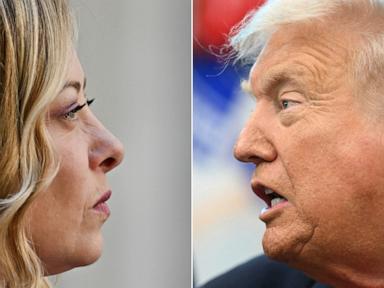
Trump, Meloni feud over G7 photo, US support for Iran war
Former President Trump and Italian PM Meloni exchanged public barbs over a G7 photo claim and US support for the Iran war.
President Donald Trump reignited a public dispute with Italian Prime Minister Giorgia Meloni on Saturday, asserting on social media that she had repeatedly requested a photograph together at the recent G7 summit. This claim comes despite Ms. Meloni’s direct denials and the pushback from Italian ministers.
Trump, who has been vocal about his perceived slights from allies, also criticized Ms. Meloni for what he described as a lack of support for the United States’ stance on Iran's nuclear program and the use of Italian military facilities. The former president suggested her actions were harming her popularity in Italy.
In response, Prime Minister Meloni posted a screenshot of Trump's remarks, calling his attacks "unprovoked and senseless." She emphasized that her popularity is tied to defending Italy's national interests, not her relationship with him. Meloni also reiterated Italy's support for the U.S. and the presence of American military bases in her country.
The public exchange began after Trump claimed in an interview with an Italian journalist that Ms. Meloni was eager to have a photo taken with him during the summit. The White House has not yet commented on the ongoing dispute.
Trump’s social media post detailed his belief that Meloni was "doing poorly in Italy with her level of popularity," attributing this to her alleged refusal to fully support the U.S. in preventing Iran from developing nuclear weapons. He also stated that Italy had denied access to its landing strips, causing logistical difficulties for the U.S. despite significant American contributions to NATO’s defense of Italy.
Meloni directly challenged Trump’s assessment of her popularity, stating it does not depend on her relationship with him but on her ability to protect Italy's interests. She advised Trump to focus on his own popularity instead of commenting on hers. The Italian Prime Minister indicated she would not further engage on the subject.
This public spat highlights the ongoing tensions between Trump and European leaders, particularly regarding foreign policy and international alliances. The G7 summit, intended for coordinated global policy discussions, has become a backdrop for personal disagreements.
The dispute also touches upon broader geopolitical issues, including the U.S. strategy in the Middle East and the burden-sharing within NATO. The differing perspectives underscore the challenges in maintaining a united front among allies, especially with shifting political landscapes and personal dynamics at play.
This article was written by AI based on publicly available news reporting. Original reporting by the linked source.