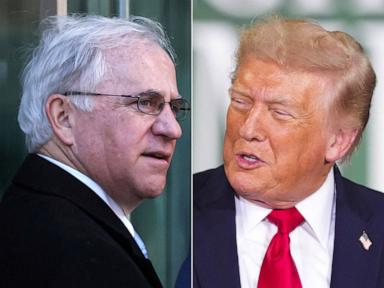
Trump Pardons Ex-Rep. Stephen Buyer Convicted of Insider Trading
President Trump granted a pardon to former Republican Rep. Stephen Buyer, who served 22 months for insider trading convictions.
President Donald Trump announced Friday he has issued a pardon to former Republican Representative Stephen Buyer of Indiana, who was convicted of insider trading.
Buyer, who served in Congress for 18 years before leaving office in 2011, was charged by the Securities and Exchange Commission in 2021. The charges stemmed from allegations that he traded stocks using non-public information about the merger of T-Mobile and Sprint, which he learned about through his consulting firm.
Following his conviction by a Manhattan federal jury in September 2023, Buyer was sentenced to 22 months in prison. He was released last year after completing his sentence. The pardon proclamation, dated June 4, highlighted Buyer's service in Congress and as a judge advocate general in the U.S. Army, describing his record as distinguished and highly productive, without mentioning the conviction.
The pardon carries significant implications, particularly given President Trump's past public statements. Trump has previously expressed strong disapproval of insider trading, especially in prediction markets, and has publicly supported banning members of Congress from trading individual stocks, vowing to sign such legislation into law.
The move to pardon Buyer follows a recent surge of clemency requests. Days before the announcement, Trump shared letters on social media from numerous Republican figures, including 42 retired members of Congress, urging him to grant Buyer leniency. These letters also referenced Buyer's extensive tenure in Congress and his role as a House prosecutor during the impeachment of President Bill Clinton.
The proclamation cited support for the pardon from several Republican leaders, including Senator Lindsey Graham of South Carolina. This backing from prominent party members underscores the political dimension of the clemency decision.
Buyer's conviction and subsequent pardon raise questions about the application of justice and the role of political influence in clemency decisions. While the pardon effectively nullifies the legal consequences of Buyer's conviction, it does not erase the underlying accusations or the jury's verdict.
This pardon comes amid a broader discussion about stock trading by lawmakers and public officials. President Trump himself has advocated for stricter regulations in this area, making his decision to pardon Buyer, who was convicted of insider trading, a point of notable contrast and potential scrutiny.
This article was written by AI based on publicly available news reporting. Original reporting by the linked source.