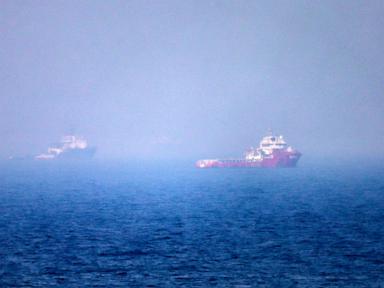
Trump reimposes Hormuz blockade, adds 20% cargo fee for passage
President Trump announced a naval blockade on Iranian ports and a new fee for commercial ships crossing the Strait of Hormuz, unraveling a recent peace deal.
President Donald Trump announced Monday he will reimpose a naval blockade on Iranian ports and levy new charges on commercial ships crossing the Strait of Hormuz, a move that unravels the last threads of a preliminary peace deal with Iran. The new strategy appears aimed at recouping some costs incurred during recent conflict.
This decision effectively erases the last remaining concession to Tehran provided under a memorandum of understanding signed just 26 days ago. The preliminary deal was forged amid escalating tensions and tit-for-tat strikes between the U.S. and Iran, bringing both nations to the brink of full-fledged war.
Trump stated that the U.S. would become the "Guardian of the Hormuz Strait" and, as a matter of "fairness," would be reimbursed 20% of the value of a vessel's cargo for providing safe passage. He justified this by saying the U.S. had guarded the strait for 50 years without payment and wanted reimbursement for putting its personnel in danger.
The reimposition of the naval blockade was largely anticipated following failed diplomatic efforts over the weekend to de-escalate rapidly rising tensions. However, the announcement regarding the collection of fees from commercial vessels appeared to surprise some members of his administration, foreign governments, and international organizations.
While the Trump administration has not yet detailed how or when it will seek to collect these fees, U.S. Central Command confirmed the blockade's resumption at 4 p.m. ET on Tuesday. Additional information for commercial mariners is expected to be provided through a formal notice.
Secretary of State Marco Rubio, a close adviser to Trump, has reportedly voiced strong opposition to imposing a toll on the waterway, characterizing it as a potential violation of international law. He stated in late June that no nation supports paying for passage through the straits.
Administration officials indicated that many national security advisors were skeptical of Iran's commitment to the memorandum of understanding. However, President Trump was reportedly motivated by a desire to address economic turmoil caused by Iran's control over the Strait of Hormuz.
With the preliminary deal now seemingly defunct and tensions high, the reimposition of the blockade and the introduction of cargo fees represent a significant shift in U.S. strategy in the strategically vital waterway.
This article was written by AI based on publicly available news reporting. Original reporting by the linked source.