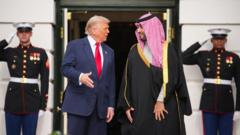
Trump: Saudi nuclear deal hinges on Israel recognition via Abraham Accords
Donald Trump stated the US-Saudi nuclear deal requires Saudi Arabia to join the Abraham Accords and recognize Israel.
Former US President Donald Trump has declared that a civil nuclear deal between the United States and Saudi Arabia is contingent upon Riyadh recognizing the State of Israel. Trump specified that the deal, which he stated would not permit uranium enrichment, is "totally subject to Saudi Arabia joining the very respected and successful Abraham Accords."
The condition was communicated by Trump via a post on his social media platform, Truth Social. The Abraham Accords, which Trump helped broker, have previously facilitated the normalization of relations between Israel and several Arab nations. During his presidency, the UAE and Bahrain signed the accords, followed by Sudan, Morocco, and Kazakhstan.
Saudi Arabia has historically maintained that it would not recognize Israel without the establishment of a Palestinian state. The kingdom has not yet issued a public response to Trump's remarks. The announcement of the nuclear deal between the US and Saudi Arabia came just days prior, drawing criticism from some experts who voiced concerns about potential nuclear proliferation risks in the Middle East.
It remains unclear whether the condition of joining the Abraham Accords was formally included in the text of the nuclear deal itself, which has not been publicly released. The White House has been contacted for comment on the matter. Israel, however, reacted positively to Trump's statement, with Prime Minister Benjamin Netanyahu's office calling Saudi Arabia's potential accession to the accords "an historic leap forward for peace in the Middle East."
Israeli Economy Minister Nir Barkat also indicated that Israel could manage the situation if Saudi Arabia were to develop nuclear power for peaceful purposes. Israel itself is widely believed to possess nuclear weapons, though it neither confirms nor denies this. The US Department of Energy has described the US-Saudi agreement as a peaceful nuclear cooperation initiative designed to offer significant opportunities for American companies within Saudi Arabia's burgeoning nuclear energy program.
The development comes amid ongoing international scrutiny of Iran's nuclear activities. Saudi Arabia's de facto ruler, Crown Prince Mohammed bin Salman, stated in 2018 that while his nation had no plans to acquire nuclear weapons, it would "follow suit as soon as possible" if Iran developed a nuclear bomb. Earlier reports had suggested the deal might permit Saudi Arabia to enrich uranium, a process that can be used for both nuclear power and weapons.
Trump's assertion appears to directly address and potentially restrict such capabilities as part of the broader diplomatic framework. Rosemary Kelanic, director of the Middle East program at the Defense Priorities think tank, offered an analysis, though the specific content of her statement was cut short in the provided material.
This article was written by AI based on publicly available news reporting. Original reporting by the linked source.