Trump: Secret flight posed 'greater risk' than decoy Air Force One
President Trump stated his secret departure from Turkey on a military aircraft was riskier than a decoy Air Force One.
President Donald Trump said Tuesday night that his secret flight out of Turkey last month, which involved a decoy Air Force One, was a decision made by the Secret Service and the U.S. military to ensure his safety.
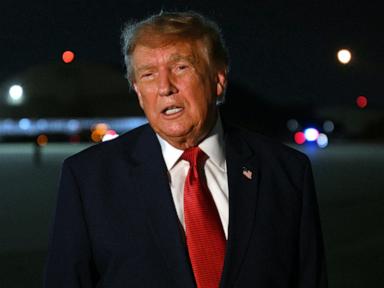
Trump, speaking to reporters on the tarmac at Joint Base Andrews following a trip to Ohio, indicated that he follows the directives of security personnel regarding his travel arrangements. "I just follow what they'd like to do," Trump said, adding that the Secret Service and military suggested he use a different plane for "equal safety."
Sources familiar with the operation, as reported by The Washington Post, revealed that Trump secretly transferred from the primary Air Force One to a military aircraft via a catering container. This maneuver was conducted without the knowledge of the traveling press corps and some White House officials who were on the decoy flight. Secretary of State Marco Rubio and Treasury Secretary Scott Bessent were reportedly aboard the decoy Air Force One, while Defense Secretary Pete Hegseth accompanied the president on the other aircraft.
While Trump downplayed specific threats at the time, stating he "didn't really ask too much about it" and receives "a lot of threats," he asserted that the decoy Air Force One was not the riskier option. "I think actually the plane that I flew on was at greater risk," Trump claimed, suggesting it would have been a more likely target.
At the time of his departure from Turkey, Trump had publicly announced he would be flying on the older Air Force One, stating the newer aircraft, a gift from Qatar, was being sent to a U.K. base for service members to tour. This public statement contrasted with the covert nature of his actual travel.
ABC News had previously reported that Trump was advised against taking the older Air Force One due to security concerns amidst escalating tensions with Iran. The elaborate ruse underscores the heightened security measures taken to protect the president during his international travel.
During the decoy flight, reporters on board were instructed to keep their windows closed for the entire duration, a directive attributed to the Secret Service. This detail further highlights the unusual security protocols implemented during Trump's departure.
The incident raises questions about the operational complexities and the lengths to which security agencies will go to safeguard a sitting president, particularly in volatile geopolitical environments.
This article was written by AI based on publicly available news reporting. Original reporting by the linked source.