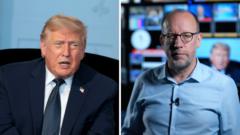
Trump Slams Netanyahu on Lebanon Strikes: 'Vicious' Force Questioned
Donald Trump sharply criticized Israeli Prime Minister Benjamin Netanyahu for "vicious" strikes on Lebanon, questioning Israel's use of force.
Former U.S. President Donald Trump has issued unusually strong criticism of Israeli Prime Minister Benjamin Netanyahu, specifically condemning recent Israeli strikes on Lebanon. Trump described the attacks as "vicious" and openly questioned Israel's methods and the extent of its force.
The former president's remarks signal a notable departure from typical U.S. political rhetoric regarding the long-standing Israeli-Palestinian conflict, where bipartisan support for Israel has historically been a cornerstone of U.S. foreign policy. Trump's sharp rebuke of a close U.S. ally and its leader suggests a potential shift or at least a public disagreement on the international stage.
Trump went further, suggesting that even Syria might have handled the situation with Hezbollah more effectively, implying a less costly outcome in terms of civilian casualties. This comparison indicates a deep dissatisfaction with Israel's current military operations and strategic approach in the region.
The implications of Trump's statements are significant, potentially affecting U.S.-Israel relations and the broader geopolitical dynamics in the Middle East. His direct criticism could embolden those who question Israel's military actions and could put pressure on the Netanyahu government.
This public disagreement comes at a complex time for the region, where tensions between Israel and Iran, as well as proxy groups like Hezbollah, have been escalating. The exchange of missile strikes between Israel and Iran, occurring for the first time since a two-month ceasefire, highlights the volatile security environment.
Trump's critique also surfaces amidst his own political positioning. While he has denied promising "no new wars" during his 2024 campaign, as evidenced by BBC Verify findings, his current statements on foreign conflicts reflect a critical stance on the use of military force and its consequences.
Experts are analyzing whether this criticism represents a personal stance by Trump or a broader signal about potential future U.S. foreign policy under his leadership. The effectiveness of diplomatic channels versus military action in resolving regional conflicts remains a central point of debate.
Unresolved questions remain about the specific intelligence or events that prompted Trump's strong reaction and whether these comments will lead to any tangible changes in U.S. policy or diplomatic engagement concerning the conflict.
This article was written by AI based on publicly available news reporting. Original reporting by the linked source.