Trump in 'no hurry' for Iran peace deal, rules out partial compromise
President Trump stated he is in no hurry to finalize a peace deal with Iran, rejecting a limited agreement focused on the Strait of Hormuz.
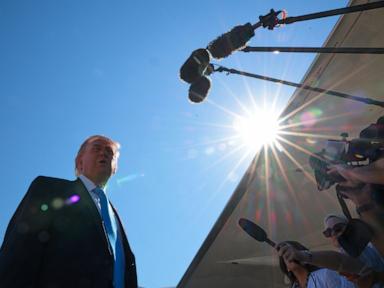
President Donald Trump announced Wednesday he is in "no hurry" to finalize a peace deal with Iran, approximately three months after initiating major combat operations. Speaking to reporters, Trump indicated he would not consider a limited agreement with Iran, specifically ruling out a deal focused solely on reopening the Strait of Hormuz.
This statement comes amidst an ongoing, open-ended ceasefire following initial U.S.-Israeli strikes that targeted Iranian military, government, and infrastructure sites beginning February 28. Previous talks held in Pakistan in April failed to produce a peace agreement, leading to the extension of the ceasefire and a continued U.S. blockade until negotiations conclude.
Trump compared the current situation to protracted historical conflicts, noting that the U.S. has been involved in wars in Vietnam for 19 years, Afghanistan for 10 years, and Iraq for 12 years. He highlighted that the current conflict with Iran has lasted only three months, with a significant portion under a ceasefire. "I'm in no hurry. You never think, ‘Oh, the midterms, I'm in a hurry. I'm in no hurry,'" Trump stated, dismissing any notion of pressure to expedite a resolution.
Meanwhile, China and Russia have condemned the U.S.-Israeli strikes. Chinese President Xi Jinping and Russian President Vladimir Putin, in a joint statement from Beijing, urged an immediate end to the conflict, calling the military actions a breach of international law that undermines regional stability.
An Israeli military official confirmed that Israel is closely monitoring the U.S.-Iran negotiations and is in constant contact with American counterparts. The official added that the Israel Defense Forces are prepared for "all scenarios" and have various operational plans in place.
The Islamic Revolutionary Guard Corps (IRGC) has warned that the war could "extend beyond the region" if fighting resumes. Iran's representative, Araghchi, has also stated that Iran is preparing "more surprises" should the conflict restart.
Trump's administration has previously linked economic concerns to the Iran nuclear threat, with the President stating in May 2026 that such matters were "peanuts" compared to the perceived danger. The details of Iran's "surprises" and the specific objectives of the U.S. blockade remain points of ongoing international attention.
The current stance suggests a prolonged negotiation period, with the U.S. emphasizing a comprehensive resolution rather than piecemeal agreements, while regional adversaries issue stark warnings about escalation.
This article was written by AI based on publicly available news reporting. Original reporting by the linked source.