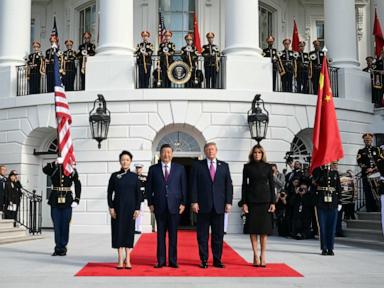
Trump Welcomes Xi Jinping to White House for Crucial State Visit
President Trump and Xi Jinping met at the White House for a day of high-stakes meetings and a state dinner.
President Donald Trump welcomed Chinese President Xi Jinping to the White House on Thursday for a high-stakes state visit, marking a significant diplomatic engagement between the two global powers. The leaders were scheduled to hold a series of meetings throughout the day, culminating in a state dinner.
The visit underscores the complex and often tense relationship between the United States and China, encompassing trade, security, and geopolitical issues. The presence of both leaders at the White House for such an occasion signals an attempt to navigate these critical areas, despite underlying challenges.
President Trump and First Lady Melania Trump formally greeted President Xi and his wife, Peng Liyuan, during a state arrival ceremony held on the South Lawn of the White House. The event, attended by officials from both nations, set a formal tone for the discussions that were to follow.
The implications of the meetings are far-reaching, potentially influencing global economic policies, international security frameworks, and the future trajectory of U.S.-China relations. Observers anticipate discussions will cover a range of sensitive topics, with outcomes likely to be closely watched by international markets and governments worldwide.
This state visit represents a key moment in the ongoing dialogue between Washington and Beijing. The specific agenda items, though not fully detailed, are understood to include pressing economic disparities, strategic competition, and areas of potential cooperation.
Historically, U.S.-China relations have been characterized by periods of both cooperation and significant friction. Such high-level meetings are often designed to manage disagreements and identify common ground, even amidst broader strategic competition.
Reactions from various stakeholders, including business communities and international policy experts, are expected to be mixed, reflecting the diverse perspectives on the U.S.-China relationship. The outcomes of the discussions will likely shape the narrative surrounding bilateral ties for the foreseeable future.
Unresolved questions remain regarding the specific commitments or agreements that may emerge from the visit. The long-term impact will depend on the implementation of any decisions made and the subsequent diplomatic engagements between the two nations.
This article was written by AI based on publicly available news reporting. Original reporting by the linked source.