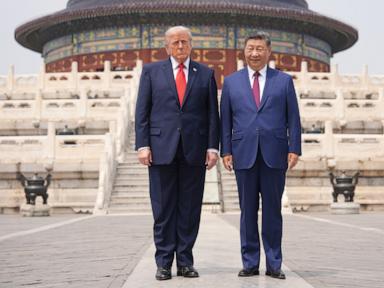
Trump, Xi Meet Amid Tensions on Iran, Taiwan, Trade, AI
President Trump hosts Chinese President Xi Jinping for a high-stakes state visit at the White House, navigating deep distrust and thorny global issues.
President Donald Trump will host Chinese President Xi Jinping at the White House this week for a state visit, a high-stakes encounter aimed at navigating a complex web of global tensions and deep mutual distrust between the two geopolitical rivals. The meeting comes amid significant disagreements on issues including artificial intelligence safety, Taiwan, trade, the war in Iran, and critical minerals.
The U.S. and China have maintained a relationship that has been described as fragile and at times frosty. This state visit marks the first time the leader of China has visited the U.S. for such an occasion in over a decade, with Xi's last visit occurring in September 2015 during the Obama administration. President Trump himself visited China in May for talks with Xi.
Preparations for the visit include an unusual arrival ceremony at Joint Base Andrews outside Washington, reflecting the significant attention and pomp surrounding the event. On Thursday, Trump and First Lady Melania Trump will officially welcome Xi and his wife, Peng Liyuan, at the White House, followed by a troop review in the Rose Garden and formal bilateral talks. A state dinner in the East Room, where both leaders are expected to deliver remarks, will honor the Chinese delegation.
Trump has characterized the upcoming discussions as "a great meeting" and "a big deal," noting the high demand to attend the state dinner, which he described as a "tough ticket." The guest list for the dinner includes prominent figures from the technology sector, such as Amazon founder Jeff Bezos, Tesla and SpaceX's Elon Musk, Meta's Mark Zuckerberg, Google's Sundar Pichai, and Dell Technologies CEO Michael Dell. Other notable attendees will include Nvidia's Jensen Huang, OpenAI's Sam Altman, Citigroup CEO Jane Fraser, and former Apple CEO Tim Cook.
The agenda for the summit is packed with critical and often contentious topics. Artificial intelligence safety has emerged as a significant concern, alongside long-standing disputes over Taiwan's political status and ongoing trade imbalances. The war in Iran and the strategic importance of critical minerals also present complex challenges requiring diplomatic navigation.
These issues underscore the deep-seated rivalry between the U.S. and China, which are vying for global influence across multiple domains. The fragile nature of their relationship means that progress on any of these fronts may be incremental, with both sides likely to maintain firm stances on core national interests.
Following the formal events on Thursday, Xi and his wife are scheduled for a private tea with the Trumps on Friday, which will include a tour of the National Archives to view historical national documents. This portion of the visit suggests an attempt to foster some level of personal rapport amidst the broader geopolitical challenges.
Ultimately, the success of the state visit will be measured by the extent to which both leaders can manage disagreements and identify areas for potential cooperation, even as underlying tensions persist. The outcomes could have significant implications for international relations, global trade, and technological development.
This article was written by AI based on publicly available news reporting. Original reporting by the linked source.