Trump's Iran talks: Bluster aside, negotiation is the only option
Despite threats, President Trump's administration continues to pursue negotiations with Iran, acknowledging limited alternatives.
President Donald Trump's recent remarks about Iran, oscillating between harsh condemnation and the possibility of a negotiated agreement, warrant serious consideration given his position as U.S. President. Speaking at the NATO summit in Turkey, Trump characterized Iran as "scum," "sick people," and "vicious, violent people" who would misuse nuclear weapons. He declared, "As far as I'm concerned, it's over." However, these pronouncements may not represent his final stance, as he has maintained a continuous public commentary on the conflict and ongoing memorandum of understanding (MOU) negotiations.
Trump's rhetoric has notably shifted, encompassing claims of victory, threats to "annihilate Iranian civilization," and subsequent endorsements of negotiations. He later intensified his threats, stating the U.S. would "probably hit them harder again tonight," implying a warning had been issued. While the U.S. possesses the military capability to inflict significant damage on Iran, it has been unable to compel the regime to abandon its core demands, including control over navigation in the Strait of Hormuz.
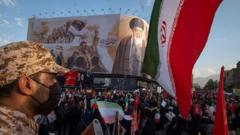
Amidst his latest verbal onslaught, Trump indicated that talks would persist. These discussions were temporarily paused due to Iran's extensive funeral observances for its former supreme leader, Ayatollah Ali Khamenei, who died on February 28 during joint U.S.-Israeli air strikes at the outset of the war. When questioned if the recent exchange of strikes between the U.S. and Iran signaled an end to negotiations, Trump, referring to his chief negotiators Steve Witkoff and Jared Kushner, remarked, "I don't care, they can talk. But I think they're wasting their time." He also characterized the Iranian regime as "a bunch of lying guys."
This statement can be interpreted as an acknowledgment that, despite his aggressive posturing, the U.S. president perceives limited alternatives to direct negotiation with Iran. The U.S. and its Gulf allies have engaged in military exchanges with Iran, but efforts to dismantle the Iranian regime have proven unsuccessful. The negotiating process, however, remains precarious.
A source involved in mediation efforts described the recent developments as "a setback for sure," noting that the atmosphere is "very tense." This diplomatic phrasing suggests that the recent escalation has created a challenging environment for talks between two nations with profound distrust, where neither is convinced the other will honor any potential agreement.
The core of the recent military confrontations between Iran and the U.S. stems from the Iranian regime's unwavering resolve not to revert to the pre-war status quo, particularly concerning its control over maritime routes. This determination is a significant factor influencing the dynamics of the ongoing negotiations.
Experts suggest that Trump's administration faces a strategic dilemma. While military options can impose costs, they have historically failed to achieve fundamental policy shifts from Iran. This leaves diplomacy, however fraught, as the primary avenue for de-escalation and potential resolution.
The situation highlights the complex interplay of military posturing and diplomatic engagement in international relations. The success of the ongoing MOU negotiations will likely depend on the ability of mediators to navigate the deep-seated animosity and mistrust between the two nations, alongside Iran's persistent strategic objectives.
This article was written by AI based on publicly available news reporting. Original reporting by the linked source.