Uganda launches food aid after 19 die from hunger amid severe drought
Uganda distributes 9,400 tons of food to 1.5 million people in Karamoja following 19 hunger-related deaths.
Uganda has initiated an emergency food distribution program in the Karamoja region following reports of at least 19 deaths attributed to hunger. The crisis has been exacerbated by a prolonged drought that has led to widespread crop failures, leaving an estimated 1.5 million people facing severe food shortages and malnutrition.
The situation in Karamoja has been escalating for months, with the Famine Early Warning Systems Network (Fews Net) classifying the region as being in a state of crisis. The lack of expected rainfall since April has devastated the agricultural season, which is critical for the livelihoods of the local population.
In response, the Ugandan government has committed to distributing 9,400 tonnes of relief food over the next two months. This initiative is funded by a 45 billion Ugandan shilling (£9 million) emergency allocation approved by parliament, marking the first large-scale government-led operation of its kind after a significant funding gap from international aid organizations.
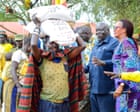
Sam Engola, the minister for disaster preparedness and refugees, officially launched the distribution efforts at Potome primary school in Lodiko sub-county, Kaabong district. He emphasized the government's commitment to ensuring that all affected individuals receive assistance, stating that the president is prioritizing the well-being of the Karamoja population.
Karamoja is currently experiencing its most severe dry spell in recent memory. Farmers have been unable to salvage crops, as the last significant rainfall occurred at the beginning of the planting season in April. This has created a dire situation for communities heavily reliant on agriculture for sustenance.
The scale of the food insecurity in Karamoja is substantial, with projections indicating that a significant portion of the region's 1.5 million inhabitants are at risk of acute malnutrition. The government's intervention aims to provide immediate relief while longer-term solutions are sought.
This government-led food distribution marks a shift in response strategies, particularly in light of reported reductions in international aid. The procurement of the relief supplies underscores the urgency with which the authorities are addressing the unfolding humanitarian crisis in the northeastern region.
Further details on the ongoing distribution and the specific needs of affected communities are expected as the operation progresses. The duration and effectiveness of the aid will be crucial in mitigating the immediate impacts of the drought and food scarcity in Karamoja.
This article was written by AI based on publicly available news reporting. Original reporting by the linked source.