UK Home Secretary to Act on Deporting Rochdale Grooming Gang Leader
Home Secretary Shabana Mahmood will outline legal steps to deport a freed Rochdale grooming gang leader, defying a 1971 law.
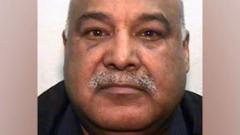
Home Secretary Shabana Mahmood is set to reveal on Monday the legal strategy to deport the ringleader of a Rochdale grooming gang, who was released from prison earlier this month. Shabir Ahmed, previously sentenced to 22 years for multiple child sexual offenses including rape, was freed on license but remains in the UK due to a legal technicality.
The case has sparked widespread calls across the political spectrum for Ahmed's deportation. He had his British citizenship revoked following his conviction, leaving him solely with Pakistani nationality. However, current legislation, specifically a 1971 law, prevents the removal of a specific group of Commonwealth citizens who arrived in the UK over 50 years ago, a category Ahmed falls into.
Details on how Mahmood intends to alter the law remain unclear. Adding to the complexity, Pakistan has reportedly shown no inclination to accept Ahmed, who himself claims to have renounced his Pakistani citizenship. Ahmed was one of nine men convicted for exploiting young girls, some as young as 13, at two takeaway establishments in Rochdale and Oldham.
Following his release, Ahmed was placed in secure accommodation under 24-hour supervision and fitted with an electronic GPS tag. The government has stated that he would face re-imprisonment if he violates the strict conditions of his license. Several of his victims have expressed fear and a sense of insecurity following his release.
Ahmed's exemption from deportation, despite the loss of his British citizenship, is attributed to the 55-year-old Immigration Act. This act bars the removal of Commonwealth citizens who arrived in the UK before 1973 and had resided there for at least five years. The Home Secretary's announcement is expected to address how this legal barrier will be overcome.
While the timeline for any potential legal changes is uncertain, one government source suggested it could take up to a year. In response, Shadow Home Secretary Chris Philp proposed that sanctions, such as visa restrictions, could be imposed on Pakistan if it refuses to accept Ahmed. He emphasized that such measures should be applicable to any nation unwilling to repatriate its citizens who are criminals or in the country illegally.
Conservative MPs are advocating for the swift introduction of emergency legislation or an amendment to the current immigration bill, believing that revising the 1971 Act through standard parliamentary processes may be too protracted. Philp suggested that emergency measures could potentially enact the law change within weeks.
Victims Minister Catherine Atkinson confirmed that the government is not ruling out the use of emergency legislation, stating their determination to resolve the issue. Regarding Ahmed's claim of renounced Pakistani citizenship, Atkinson indicated that Mahmood possesses a strong record in securing deportations, citing past instances where threats of visa sanctions were instrumental in such outcomes.
This article was written by AI based on publicly available news reporting. Original reporting by the linked source.