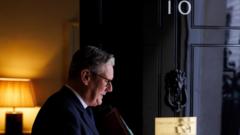
UK Prime Minister Keir Starmer Faces Party Dissent, May Resign
UK Prime Minister Keir Starmer faces growing party dissent and speculation he may resign, following a significant by-election victory by Andy Burnham.
Speculation is mounting that UK Prime Minister Keir Starmer is on the brink of announcing his resignation, a move that would mark the third such departure in four years not triggered by a general election loss. Sources within the government and the wider Labour Party suggest Starmer could make a statement as early as this morning.
This potential resignation follows a pattern seen in recent UK political history. Boris Johnson resigned in July 2022 after losing the support of his own party, despite having secured a significant majority in a previous election. Three months later, Liz Truss also stepped down after her party withdrew its backing. Now, less than two years after taking over from Rishi Sunak, Starmer appears to be facing a similar challenge.
Starmer's premiership has reportedly been deflating for months in the eyes of many within his own party. He has reportedly worked to solidify his position, including blocking Andy Burnham's attempt to contest a Westminster seat earlier this year. He also recently stated that Burnham's priority, should he win the Makerfield by-election, would be to help Labour win the Greater Manchester mayoralty, which Burnham has now vacated. Starmer offered Burnham a cabinet position.
The recent scale of Andy Burnham's victory in the Makerfield by-election appears to have emboldened dissent within the Labour Party. Burnham's success, particularly in proving he can defeat Reform UK in an area where he is popular, has led many Labour MPs to view him as a stronger electoral prospect than Starmer. These MPs are reportedly concerned about Reform UK's growing popularity and recent electoral successes.
Burnham is scheduled to be sworn in as an MP on Monday afternoon. His successful by-election campaign and subsequent victory has been seen by some within the party as a turning point, potentially unleashing pent-up dissent that was constrained during the election period.
The Prime Minister reportedly spent the weekend considering his options amidst this increasing internal pressure. The outcome of these deliberations is keenly awaited, with significant implications for the direction of the Labour Party and the UK's political landscape.
This situation highlights a period of considerable flux in British politics, with leadership changes occurring due to internal party dynamics rather than direct electoral defeat. The precedent set by the departures of Johnson and Truss suggests that a loss of party confidence can be a decisive factor for a Prime Minister.
The coming hours are expected to provide clarity on Starmer's intentions and the future leadership of the Labour Party. The political establishment and the public will be closely watching Downing Street for any official announcements.
This article was written by AI based on publicly available news reporting. Original reporting by the linked source.