UK Seizes Russian Oil Tanker, Defends Action Amid Putin Retaliation Threat
The UK seized a Russian shadow fleet tanker, drawing a threat from Putin, and defended the action as lawful disruption of war funding.
The United Kingdom government has defended its decision to seize a Russian oil tanker operating within its waters, following a stern warning from Russian President Vladimir Putin that Moscow would retaliate.
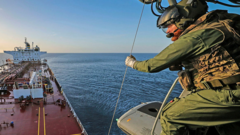
The vessel, identified as the MT Smyrtos, was intercepted and boarded by Royal Marine Commandos in the English Channel in June. It has since been held near Weymouth, southern England, as part of an operation aimed at disrupting Russia's "shadow fleet," which Western nations allege is used to circumvent international sanctions on Russian oil exports.
The captain of the MT Smyrtos, Ajay Pant, has been charged with violating Russian sanctions, specifically for allegedly supplying or delivering prohibited Russian oil. The Ministry of Defence stated that Russia operates a fleet of over 700 vessels, carrying approximately 75% of the country's sanctioned oil, which it deems critical for funding Russia's ongoing military actions.
President Putin condemned the seizure, labeling such actions by Western countries as "piracy and banditry." He issued a direct threat, stating that if more tankers are seized, Russia "will have to respond in kind" and "wherever we deem it necessary and appropriate, anywhere."
In response to Putin's threats, a UK government spokesperson asserted that the boarding of the MT Smyrtos was conducted "in full accordance with international law." The spokesperson emphasized that the UK's operation aims to "disrupt and deter shadow fleet vessels and their harmful maritime activity which is fuelling Russia's war with Ukraine." They contrasted this with Russia's shadow fleet, stating that UK forces and commercial vessels operate "firmly in line with international maritime law."
The MT Smyrtos remains detained by the Department for Transport, with its upkeep, including crew provisions, the responsibility of the ship owner. Twenty-two of the original 25 crew members were repatriated in July.
Putin's warning coincides with intensified pressure on Russia's shadow fleet by the European Union. Russian officials, including Viktor Liina, commander of Russia's Pacific Fleet, have accused Western nations of operating their own shadow fleets and claimed readiness to "inspect and detain vessels of unfriendly states."
Western nations allege that Russia's shadow fleet employs complex ownership structures and various tactics to conceal the origin of its oil cargo and mask its connection to Russia. The UK government views these activities as a critical lifeline for the Kremlin, enabling it to sustain its military operations. The precise nature and extent of Russia's planned retaliatory measures remain unclear.
This article was written by AI based on publicly available news reporting. Original reporting by the linked source.