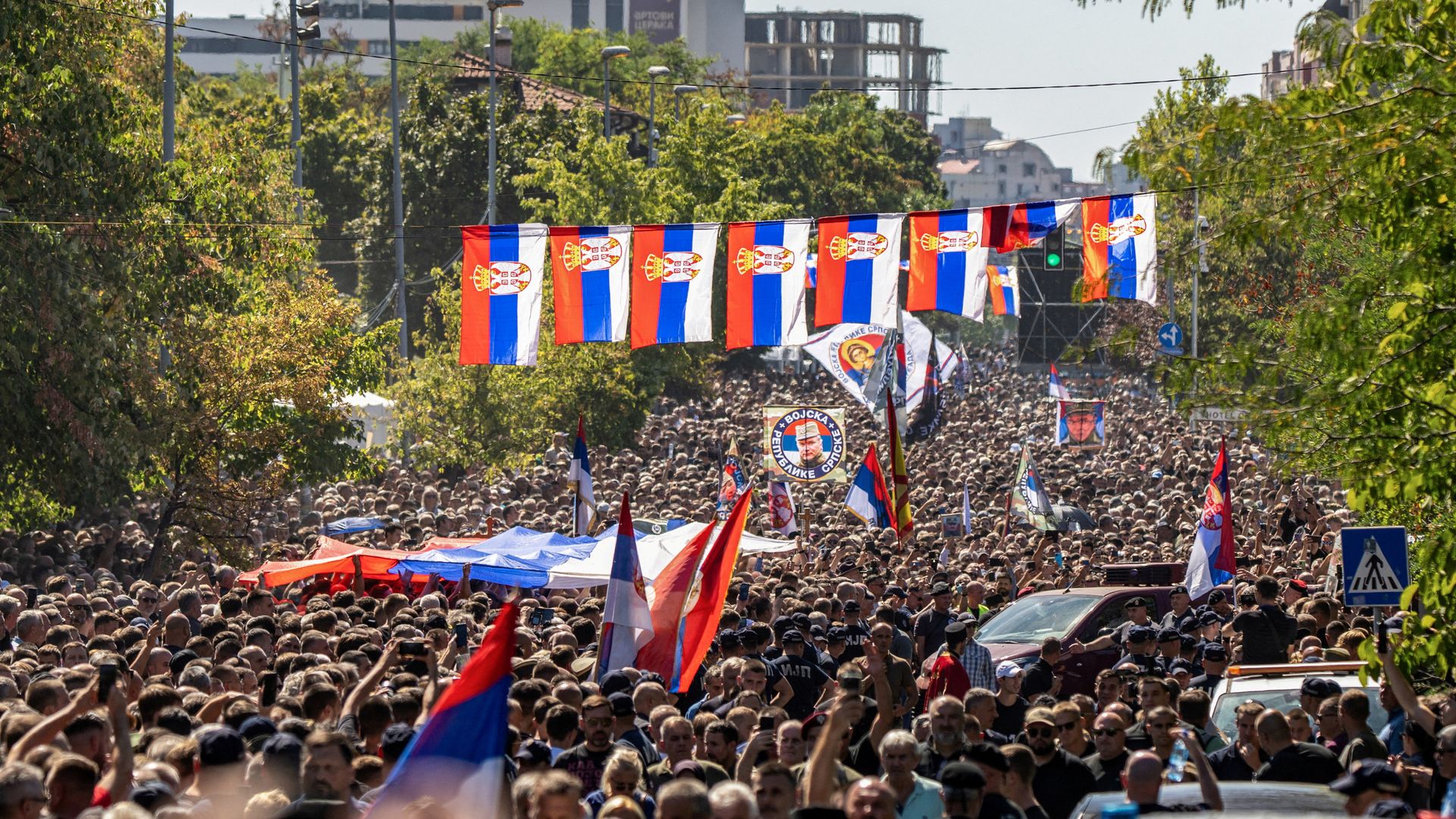
UK Summons Serbian Envoy Over 'Butcher of Bosnia' Funeral
Britain summoned a Serbian diplomat to condemn the nation's participation in Ratko Mladic's funeral, a move highlighting international disapproval of the convicted war criminal.
The United Kingdom's special envoy to the Western Balkans has summoned a senior Serbian diplomat to express condemnation regarding Serbia's involvement in the funeral of Ratko Mladic.
Mladic, widely known as the "Butcher of Bosnia," was convicted by the International Criminal Tribunal for the former Yugoslavia (ICTY) for genocide, war crimes, and crimes against humanity committed during the Bosnian War. His funeral, which took place recently, saw participation that has drawn significant international criticism.
The summoning of the Serbian diplomat underscores the UK's strong stance against the glorification of individuals convicted of such severe atrocities. While specific details of the funeral's Serbian involvement were not fully disclosed, the UK envoy's action indicates a formal diplomatic protest. The move signifies the ongoing sensitivity surrounding the legacy of the Bosnian War and its perpetrators.
This diplomatic action by the UK suggests a continued effort by Western nations to hold individuals and states accountable for actions related to the conflicts in the former Yugoslavia. It also signals a potential strain in diplomatic relations between the UK and Serbia, depending on Serbia's response and future actions.
The funeral itself reportedly drew a crowd of several thousand, with attendees expressing support for Mladic, who died in March 2021 while serving a life sentence for war crimes. His conviction included his role in the 1995 Srebrenica massacre, where over 8,000 Bosniak men and boys were systematically murdered.
Reactions from Bosnia and Herzegovina have been particularly strong, with many victims' groups and political figures expressing outrage and calling for international intervention. They view the funeral and the support shown for Mladic as a deeply offensive act and a denial of the suffering endured by victims.
International bodies and human rights organizations have also voiced concerns. They emphasize the importance of remembering the victims and ensuring that justice for war crimes is upheld. The UK's diplomatic move aligns with these broader international sentiments, aiming to prevent the revisionism of historical events and the normalization of figures associated with mass atrocities.
This incident raises questions about Serbia's commitment to reconciliation in the Western Balkans and its alignment with international norms regarding accountability for war crimes. The response from the Serbian government to the UK's summons will be closely watched by regional and international observers.
This article was written by AI based on publicly available news reporting. Original reporting by the linked source.