UK threatens visa ban on Eritreans over migrant return policy
UK threatens visa bans for all Eritreans if the country refuses to accept more migrant returns and foreign offenders.
The UK government has threatened to impose a blanket visa ban on all Eritreans if the east African nation's government does not increase its acceptance of returned migrants and foreign national offenders. Home Secretary Shabana Mahmood announced that starting Thursday, Eritrean diplomats will face movement restrictions outside of London, and fast-track visas for VIPs will be suspended.
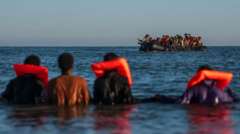
This move is part of a broader strategy by the UK government to pressure countries into accepting the return of their citizens who are in the UK illegally or have committed crimes. Eritreans constituted the largest group of nationalities arriving via small boats in the 12 months leading up to June, making up 18% of all such arrivals, according to House of Commons Library figures.
"Eritrea has had every chance to accept the return of criminals and those with no right to be in the UK. Unlike other countries, it has refused," stated Mahmood. She further indicated that further measures would be considered against other nations unwilling to cooperate on returns.
The UK government has accused Eritrean authorities of withdrawing cooperation earlier this year. The new restrictions will ban Eritrean diplomats from traveling more than 60km outside of London without prior permission, mirroring limitations placed on British officials in Eritrea's capital, Asmara.
However, Dr. Madeleine Sumption, director of the Migration Observatory at the University of Oxford, suggested that targeting Eritrea might have limited impact. "Eritrea is one of the major countries of origin for asylum seekers coming to the UK - we had roughly 7,000 asylum applications in the last year of data, roughly 8% of the total," she told BBC Radio 4's Today programme. She explained that the majority of Eritrean asylum claims are successful, with 84% granted at the initial decision stage, and more on appeal, meaning few are actually removable.
Many young Eritreans leave their home country, a one-party state that has not held elections since its independence in 1993, to avoid indefinite military conscription. The country also has severe restrictions on freedom of religion and media, with critics of President Isaias Afwerki frequently detained without trial.
The UK has previously employed similar tactics against other countries. Earlier this year, visa ban threats were issued against Angola, Namibia, and the Democratic Republic of Congo (DRC). While restrictions were imposed on the DRC last year, they were later lifted following improved cooperation on returns. Angola and Namibia agreed to changes before any penalties were enacted.
When introducing changes to the UK's asylum system in November, Mahmood had signaled that visa penalties would be used against countries failing to cooperate with return policies, including an "emergency brake" on visas for nations with high asylum claims until they repatriated their citizens residing unlawfully in the UK. The effectiveness and scope of these measures, particularly concerning Eritrea's high asylum success rate, remain to be seen.
This article was written by AI based on publicly available news reporting. Original reporting by the linked source.