Ukraine launches 1,000+ drones, hits St. Petersburg oil terminal
Ukraine deployed over 1,000 drones overnight, striking a St. Petersburg oil terminal and causing power outages, amidst renewed attacks on Russian energy infrastructure.
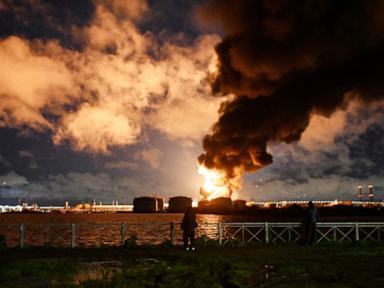
Ukraine launched a massive aerial assault overnight, deploying more than 1,000 drones targeting cities including Moscow and St. Petersburg. The widespread attack resulted in a major oil terminal in St. Petersburg being struck, with online videos appearing to show significant fires. This marks a significant escalation in Ukraine's targeting of Russian energy infrastructure.
The strikes underscore Ukraine's renewed focus on Russia's oil industry, a strategy it had previously paused under pressure from U.S. President Donald Trump. The attacks come despite Trump's recent efforts to ease pressure on Russian President Vladimir Putin, including waiving a sanctions package aimed at Russia's energy sector.
Russian officials reported that a significant number of the drones were intercepted, with the Ministry of Defense claiming to have shot down approximately 1,015 drones near Moscow and other western regions. However, the attack on St. Petersburg was described by Russian media as one of the largest the region has witnessed since the conflict began.
In St. Petersburg, Governor Alexander Beglov confirmed that emergency services were working to extinguish fires at the Ruchyi oil depot and industrial warehouses. He reported that one person was killed and five others were injured in the city, with damage to residential buildings also occurring. Separately, two transformer substations were hit in the Leningrad region, leaving around 20,000 people without electricity.
The renewed targeting of oil facilities signifies a strategic shift for Ukraine, which had reluctantly halted similar attacks following an announcement by President Trump of an "energy ceasefire." The Kremlin, however, did not adhere to this ceasefire.
Ukraine's decision to resume strikes on energy infrastructure follows President Trump's recent actions to reduce sanctions on Russia. These moves have drawn criticism from Ukrainian President Volodymyr Zelenskyy, who has suggested that such measures embolden Putin and that the diesel deal was merely a precursor to further concessions.
President Trump's decision on Friday to waive a sanctions law passed by Congress, which would have expanded measures against Russia's oil and gas industry, has further complicated the geopolitical landscape. This waiver occurred despite backlash from some lawmakers and concerns raised by Ukraine.
The full extent of the damage and the long-term implications for Russian energy production and international relations remain to be seen, as Ukraine continues to press its offensive capabilities.
This article was written by AI based on publicly available news reporting. Original reporting by the linked source.